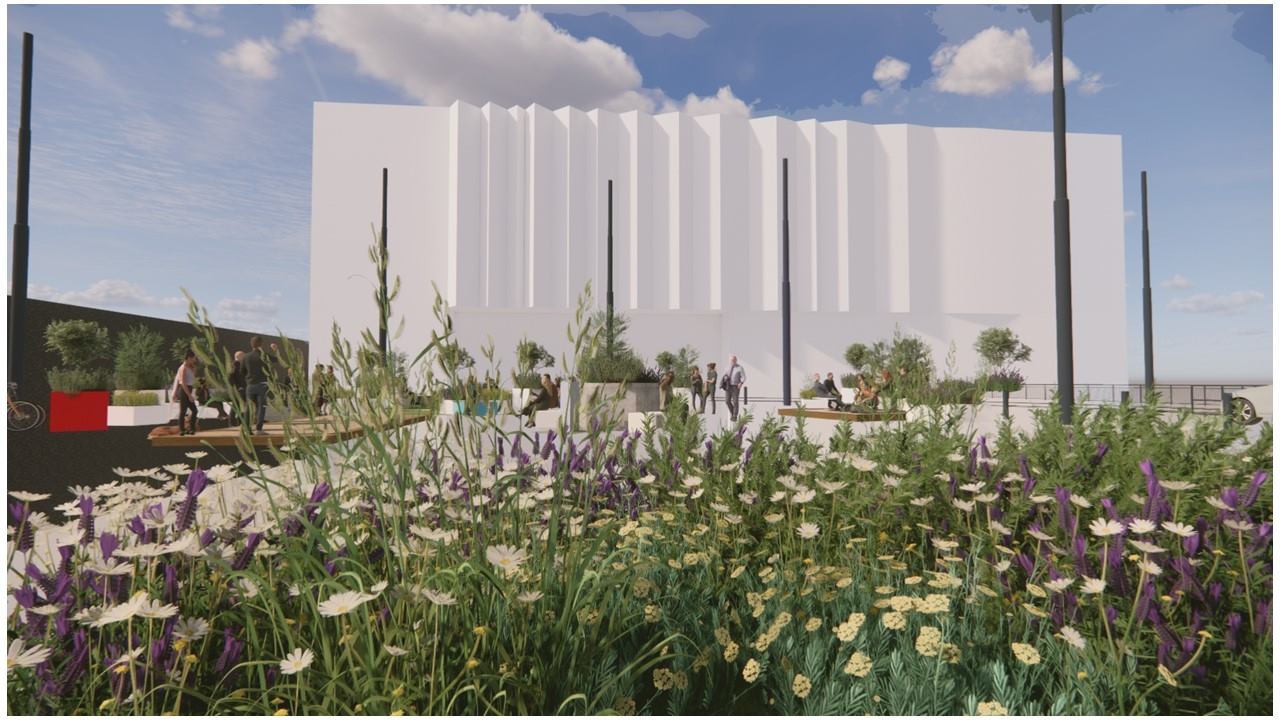
Ilmalankeidas is a neighbourhood collaboration to create green pop-up urban space at Ilmalantori, Helsinki
Published: May 28, 2025
Sweco and other companies around Ilmalantori square joined forces to create an attractive pop-up urban space, Ilmalankeidas, in Western Pasila for summer 2025, enhancing urban greenery through circular economy solutions.
Ilmalankeidas enhances urban greenery in Helsinki
Sweco’s urban planners got an idea to take over nearby urban space and create a pop-up green square in front of Sweco’s headquarters in Helsinki The experiment was coordinated in cooperation with neighbouring companies and the City of Helsinki. The less utilized square at the northern end of Western Pasila near tram line 9’s terminal has primarily been just a passage, but for summer 2025, it transforms into green hang-around spot Ilmalankeidas.
“The idea for the pop-up green square originated from Sweco employees’ daily life, as our lunch restaurant’s terrace is right next to the empty square,” says project manager Jani Päivänen from Sweco.
The square is revitalized by the local community. Companies like DNA and Hartela are involved. The revitalization work is part of the EU-funded PilotGreen project, focusing on enhancing urban nature and bringing various greening experiments to Helsinki. PilotGreen is led by the City of Helsinki’s innovation company, Forum Virium Helsinki.
“This project is an excellent example of how companies can collaboratively improve their local environment. It’s an interesting new initiative for urban greening,” says PilotGreen project manager Mirka Råberg.
Project overview: Ilmalankeidas pop-up green square
Participating companies: Sweco, City of Helsinki’s innovation company Forum Virium Helsinki, DNA, Hartela, GRK, Kekkilä, Vitreo, Maisematukku, Pala Betoni, Akria Oy, Lehtovuori, Stall Blombacke, Eg-Trading, J-Trading, Leikkiset, Saltex, and the universities of applied sciences Metropolia and LAB
Scope of services: Idea and coordination, acquiring partners and funding such as sponsorship agreements, area planning including landscape design, street design, sustainable mobility planning, and structural, lighting, and sound design
Implementation year: 2025
Sustainability in the project: circular economy, sharing economy, communal use and borrowing, supporting urban biodiversity
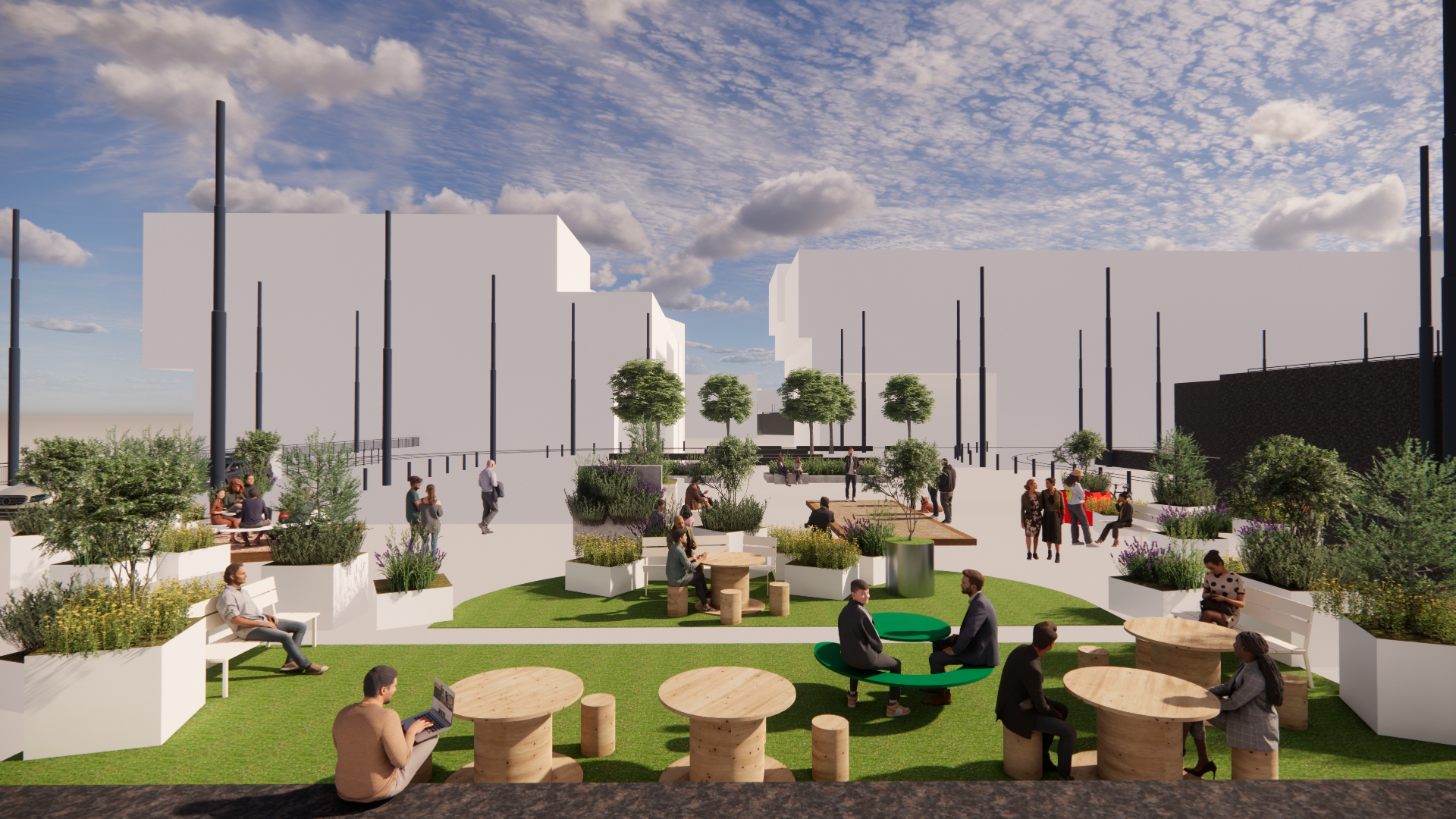
Supporting urban biodiversity with temporary solutions at Ilmalankeidas
During the experiment, Ilmalantori’s attractiveness and greenery are enhanced through circular economy solutions. The market’s furniture is borrowed from Vitreo, and the square provides a temporary home for surplus and rescue plants saved from GRK construction sites.
“Transferring plants prevents the reduction of urban greenery due to construction. In large infrastructure projects, preserving vegetation can significantly impact biodiversity,” says Päivänen.
Supporting urban biodiversity is achieved specifically with temporary solutions that don’t require permanent infrastructure or green construction. Päivänen mentions that in addition to plant sacks, two small meadow areas will be planted where all flowers bloom. Kekkilä and Maisematukku provide the growing mediums, and designers got their hands dirty in the community participation.
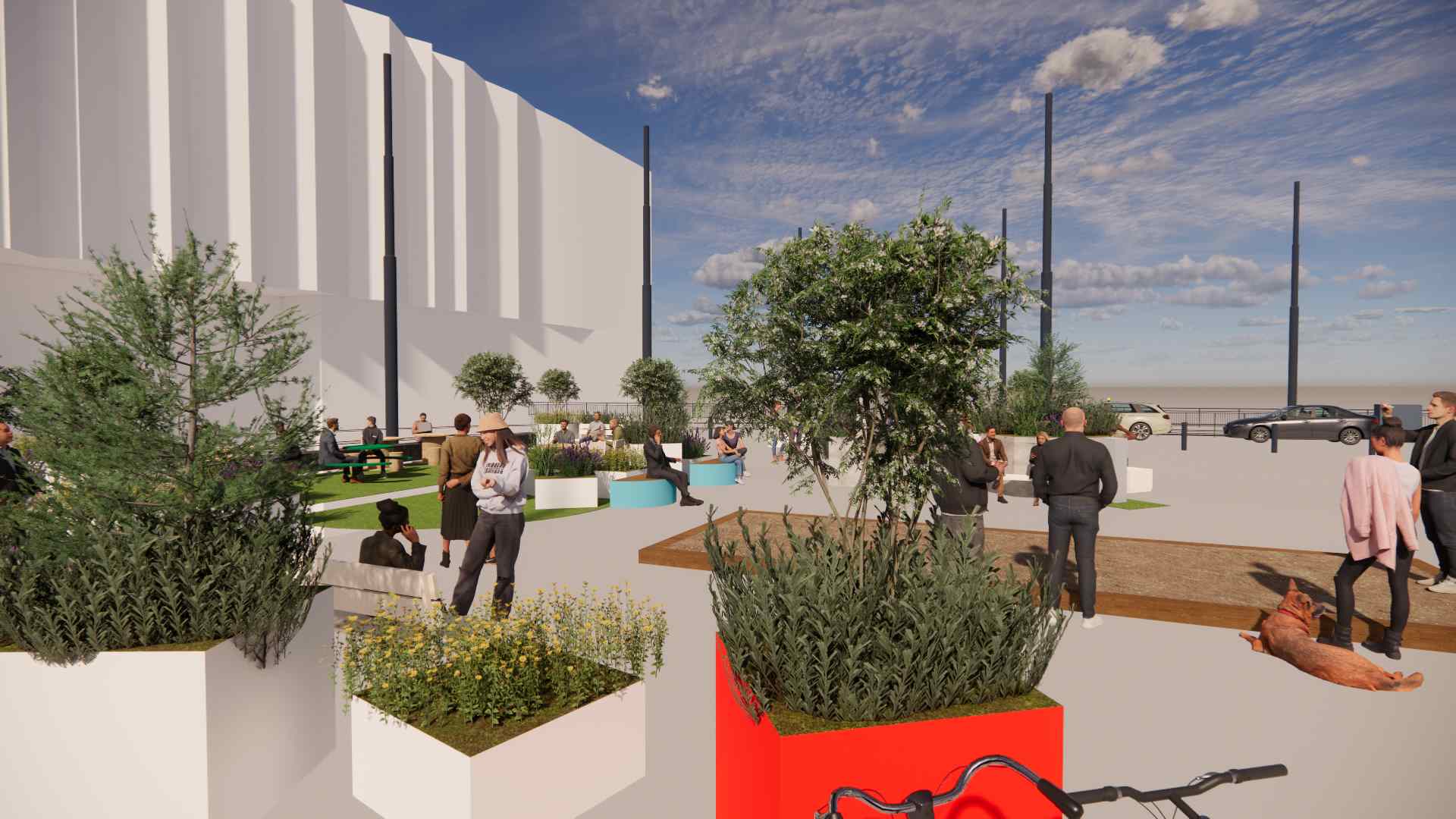
Open space for everyone at Ilmalankeidas
Ilmalankeidas will serve as an attractive summer pop-up square where residents and the area’s two thousand workers from several offices can relax in a pleasant environment during workdays.
“For example, there will be a petanque court, sun loungers, and recycled cable spool tables from construction sites,” says Päivänen. The square is suitable for various open and free events from concerts to petanque competitions to after-work gatherings organized by local actors.
The market will have a rental stage and space for temporary food trucks, as well as shaded seating areas for remote work and outdoor meetings. “Additionally, there will be empty space for refreshing morning exercises or lunch-time dances,” Päivänen envisions.
Urban planning expertise all the way from Stockholm
The experiment utilized Sweco’s expertise in street planning, landscape design, and sustainable mobility planning. Help was also received from Swedish colleagues who have designed summer streets in Stockholm.
“Our urban historian acts as the event liaison for the area, and our biologist assists Metropolia University of Applied Sciences students in identifying plant and insect species,” Päivänen adds. The design team will monitor how urban biodiversity develops and how plants attract insects at the square during the summer. Vegetation can also positively impact the windy and sun-drenched microclimate of the square.
Partners include also LAB University of Applied Sciences. “We get an urban designer from them for the project, who creates stories for the plants being planted at the square.”
Ilmalankeidas: A scalable concept for designing pop-up urban spaces
During the experiment, the goal is to develop the process itself and assess the city’s readiness to carry out similar experiments as smoothly as possible. “I expect new insights into collaboration models and cost savings produced by the circular economy,” Päivänen notes. The finished concept can be scaled and applied to similar locations.
Right now, the most important thing is the joy the area brings. Päivänen believes it’s crucial for workplaces to give people something extra, like social encounters. “I hope people will spontaneously take over the square and start creating self-directed activities. Everyone can impact their living environment if they just dare to act.”
Ilmalankeidas pop-up square will be open all summer from June 4 to September 30, 2025. After that, the square’s wintering will be monitored, and the possibility of continuing activities the following year will be assessed.