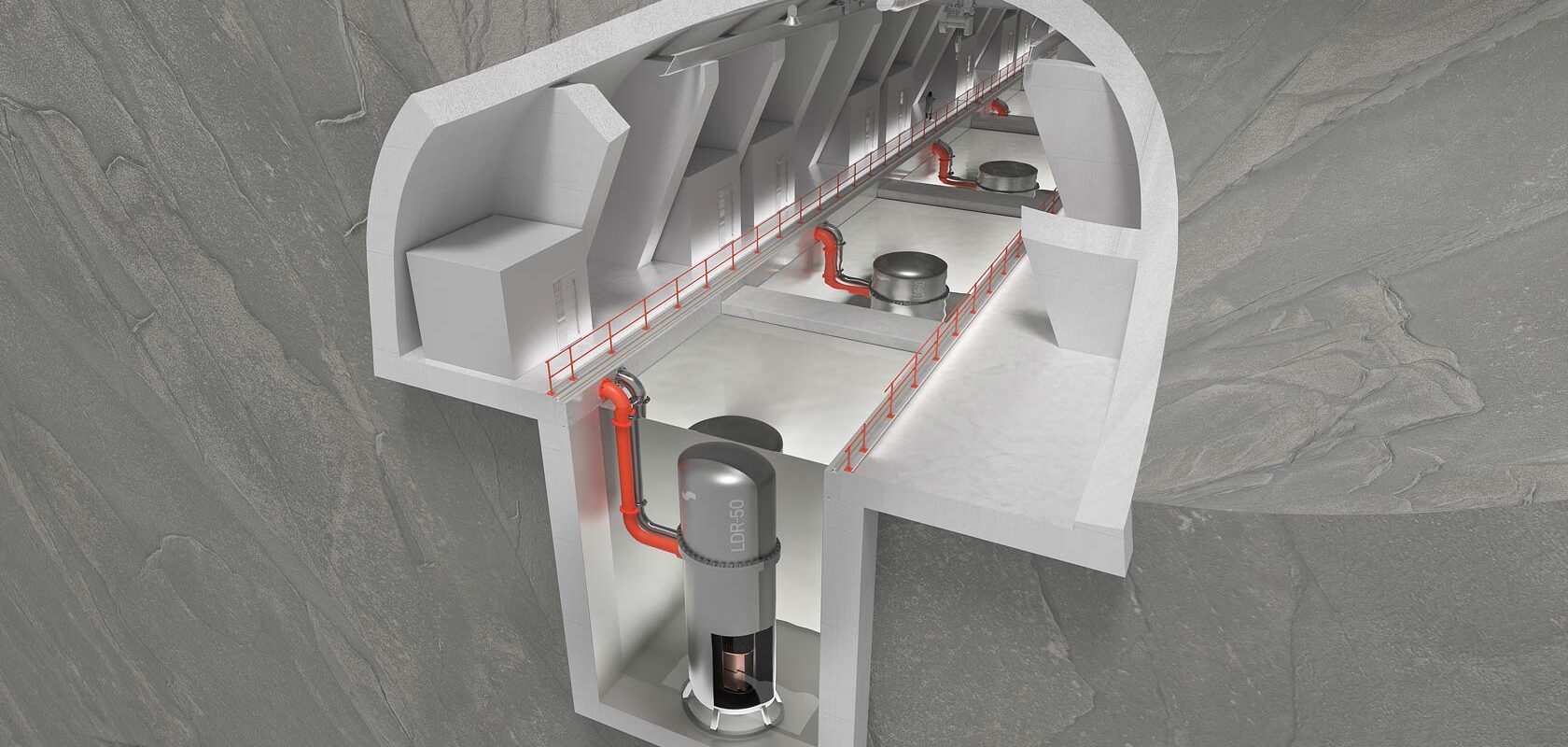
An underground plant concept was created for Steady Energy’s small nuclear power plants
Published 26.11.2025
A Finnish company, Steady Energy, is developing small nuclear power technology that can deliver fossil-free heat to district heating networks. Sweco is supporting the company’s pioneering work with concept, layout and rock-structure design for the small nuclear plant.
Steady Energy’s small nuclear plant concept
Over the past couple of years Steady Energy has been developing a small nuclear power plant concept together with Sweco’s experts. The underground plant concept enables small nuclear plants that supply heat to district heating networks in cities across Europe.
“The potential is large, because nearly 15 percent of Europe is heated by district heating”, says Antti Teräsvirta, Steady Energy’s project manager. According to him, around 90 percent of European district heat is produced using fossil fuels or by burning biomass. “There are therefore still major opportunities to reduce emissions in heating energy.”
Steady Energy has completed a small modular reactor concept, and Sweco’s task was to create a space concept and layout for a district-heat-producing small nuclear plant without a specific site.
“First we wanted a rough-level CAPEX estimate to support decision-making, but the plant and layout design evolved round by round,” Teräsvirta says. “We have consistently arrived at more cost‑efficient solutions, and I believe the design will continue to develop.”
Project Overview
Client: Steady Energy
Services included in the assignment:
Preliminary design and concept description, including layout, piping and rock engineering design, 3D modeling of structures and systems, as well as preparation of piping and instrumentation diagrams.
Implementation period: 2024–2025
Assignment objective:
Producing district heating with small nuclear reactors without using fossil fuels or burning wood mass; cost-efficient underground placement of small nuclear reactors.
Steady Energy and Sweco combine their nuclear engineering expertise
Topias Siren, Sweco’s leading expert in rock-structure design, says collaboration with the client has been smooth throughout the process thanks to Steady Energy’s extensive in-house expertise in nuclear engineering and plant design.
“We’ve been asked truly challenging questions that have put even our best specialists to the test—in a good way.”
Siren himself brings over 14 years of experience in demanding rock mechanics. He wrote his doctoral thesis on the final disposal of nuclear waste and contributed to the rock-structure design for the ONKALO facility. He also served as Professor of Practice at Aalto University (2022–2025).
“Although our original task was layout design for a district heating plant, the nuclear sector has its own terminology and regulations. Designing the plant concept required experience in nuclear engineering.”
Teräsvirta describes the collaboration as flexible and the designers as highly committed. He continues to be impressed by Sweco’s breadth of expertise: specialists in traditional design disciplines as well as niche areas like rock engineering.
“We’ve also received support in mapping different application areas for the technology we’ve developed. For example, studies have explored using our technology for salt removal.”
Pipe connections for the small reactor were 3D-modelled
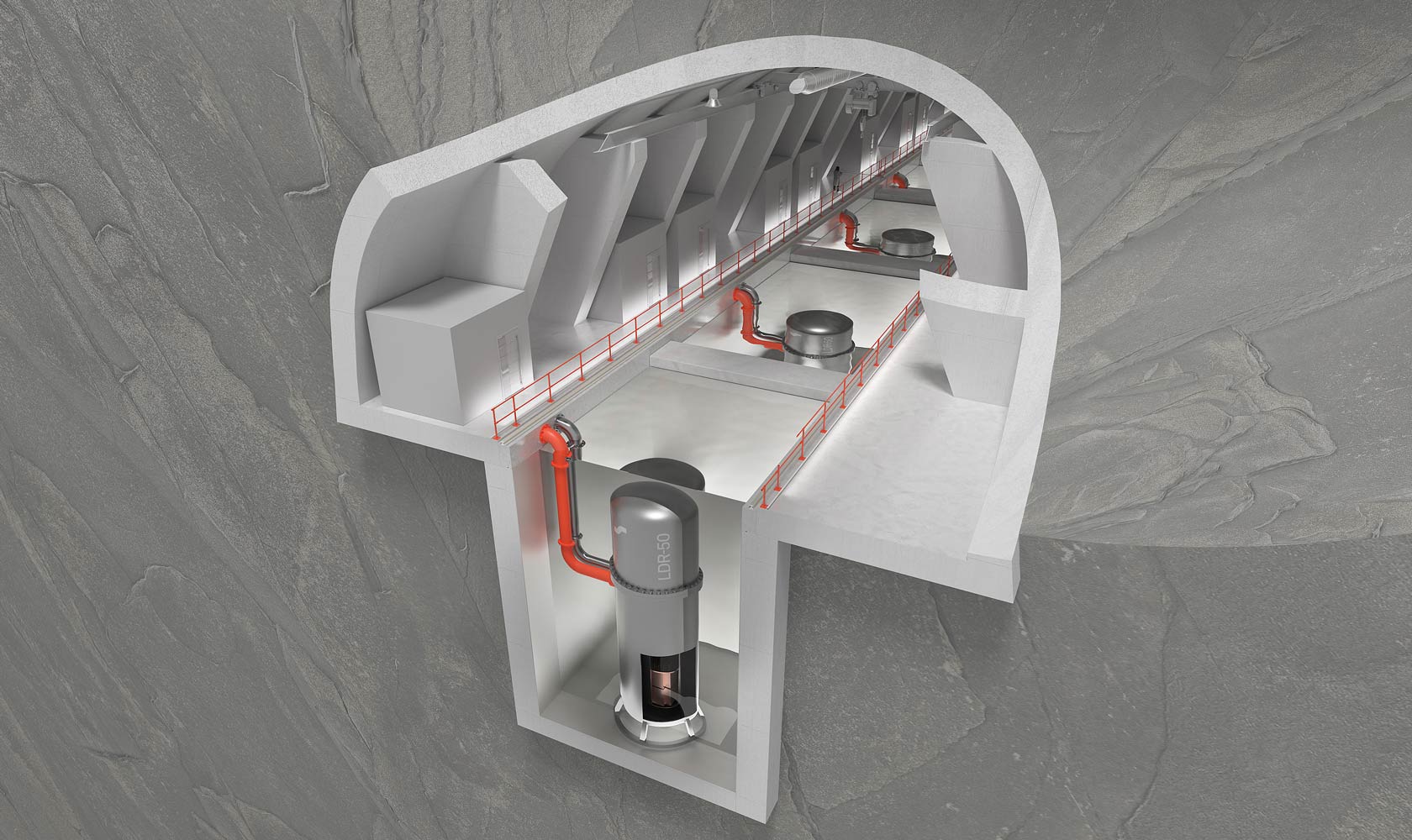
Steady Energy’s small nuclear reactors are designed to be placed in an underground hall. The plant’s size affects both its carbon footprint and costs.
“Because the space is enclosed, the layout must be carefully planned in advance”, Teräsvirta explains. “You can’t easily add extra wings underground.”
The overall design must be compact for cost efficiency, with pipe runs kept as short as possible. Designers also ensure that safety-critical systems operate independently, with several overlapping and mutually supporting systems planned for the facility.
“For nuclear safety reasons, pipe connections have been multiplied, and that takes up a lot of space”, Siren notes. Space use is optimized through 3D modeling.
“Our electrical, piping, and fire-safety designers can quickly identify intersections by modeling.”
Natural vaults in Finland’s bedrock are ideal for small reactors
Modeling is also used in designing the underground spaces. According to Siren, rock-structure design is reminiscent of building a medieval church:
“The shape of the rock vault is designed to be naturally self-supporting so that as little steel as possible is needed.”
A balance is sought between the natural vaulted arch and the masses suspended from it with steel bolts. Sweco simulates the compressive behavior of the rock using 2D and 3D rock-mechanical modeling.
Sweco’s rock-construction designers have also compared Finnish granite with softer ground conditions elsewhere in Europe.
“It showed that underground construction in Finland is extremely cost-effective. Our old bedrock naturally forms a roof”, Siren explains.
Licensing process makes history
Steady Energy’s plant concept is still evolving, and history is being made in terms of licensing. In the new draft Nuclear Energy Act, small reactors would no longer be licensed only for a specific site; the proposal includes a concept evaluation similar to type approval. This will simplify licensing by phasing the process.
“Site licensing will follow once the location is confirmed, but a pre-approved plant concept will make siting a small reactor easier and faster for energy companies”, Siren emphasizes.
Did you know? Sweco also acts as Steady Energy’s EPCM partner at the SMR test facility in Helsinki’s Salmisaari.
Image: Steady Energy