
Creating holistically sustainable urban environments through landscape architecture
All of our landscape design services are based on sustainable environmental construction (KESY). The goal of landscape design is to create green, safe, and accessible urban environments that support both people’s everyday lives and biodiversity. Our landscape architects help build a holistically sustainable society, where environments are functional, pleasant, and easy to access – and where the nearest green oasis is always close by. One of the strengths of our innovative environmental designers is the planning of culturally and historically valuable environments.
Landscape design is a key component of sustainable urban development. We bring strong expertise in environmental quality, ecosystem services, and strengthening the balance between nature and people. Landscape architects work as part of multidisciplinary urban planning teams, where landscape design is seamlessly integrated with land use, infrastructure, and construction. Together, we create solutions that support ecological, social, and economic sustainability.
Landscape design takes into account blue-green infrastructure and ecological networks already at the early stages of a project, as well as climate change mitigation and adaptation. It also covers water management, the quality of environments for sustainable mobility, the planning of recreational areas, and the preservation of cultural heritage as part of the whole.
Sustainable landscape design extends throughout the entire lifecycle of a construction project, from planning to implementation and commissioning. Through landscape design, the impacts of construction can be reduced, prevented, and compensated, for example by restoring green environments, planting trees, and protecting habitats of endangered species. In this way, landscape design supports the long-term quality, functionality, and sustainability of urban environments.
Multifunctional landscape design
The goal of landscape design is not a single outcome, but the integration of multiple benefits. Multifunctionality refers to environments that simultaneously support well-being, biodiversity, climate resilience, functionality, and economic efficiency.
A single design solution can, for example, improve stormwater management, enhance urban biodiversity, provide pleasant spaces for recreation, and strengthen the identity of an area. By combining multiple themes, we create environments that serve users in diverse ways and remain adaptable to changing needs over the long term.
Well-being as part of landscape design
Landscape design plays a significant role in supporting people’s physical, mental, and social well-being. Well-designed outdoor spaces encourage physical activity, offer opportunities for relaxation and recovery, and create settings for everyday social interaction.
In our design approach, we consider factors such as accessibility, safety, ease of access, and the experiential quality of the environment. Comfortable and multifunctional green spaces support the well-being of people of all ages and user groups, enhancing the quality of everyday life in both urban and suburban areas.
Nature-based on solutions
Nature-based on solutions
Solutions that are based on nature itself are an important part of all landscape design work. These solutions are used to create sustainable green areas that are also cost-effective to maintain, to save culturally valuable environments, and to protect biodiversity including the soil, bodies of water, plants and animals.
It is vital for a landscape designer to be included in the decision-making of an area development or infrastructure project from the very start. That allows us to help municipalities, cities, companies and construction operators to take advantage of the full potential of nature-based solutions. In every project, it is possible to increase the amount of urban greenery, recycle soil or achieve local detention of storm water. We use the Green Factor Tool, among other things, in our landscape design work.

Restoration design for valuable sites
Valuable landscape and environmental sites require specialized expertise and careful planning. The aim of restoration design is to preserve the historical, cultural, and landscape values of a site while improving its usability, safety, and functionality.
The design process is based on understanding and respecting the unique characteristics of the site. Solutions are implemented with sensitivity and a holistic perspective to ensure that the valuable environment is preserved for future generations. Restoration projects may include parks, historical environments, or areas of significant landscape value.
Design of parks and yards
Our landscape designers have a strong understanding of the users of different types of parks, squares, and public spaces, enabling us to offer functional solutions for children’s playgrounds, urban green areas, and dog parks. We also have extensive experience in the specific requirements of cemeteries and other special park environments, including planting design.
Greenery and comfort are important values not only in parks but also in the outdoor spaces of public buildings, schools, care facilities, and residential properties. Yard design is also needed in hospitals, industrial sites, and agricultural environments. We help create pleasant microclimates and select outdoor furniture, activities, materials, and plants that inspire different users. Yards and parks can also be enhanced with environmental art and lighting.
Accessibility expertise plays a key role in yard and park design. Our trained specialists carry out accessibility assessments, among other tasks. We consider accessibility broadly, ensuring that environments are safe and comfortable not only for people with visual or mobility impairments, but also for those using strollers or walkers.
Wetlands and stormwater management
Wetlands and stormwater solutions are an essential part of sustainable landscape design. We design solutions that manage stormwater in a natural way, reduce the load on water bodies, and improve the climate resilience of areas.
Stormwater solutions can be integrated into parks, street environments, and yards so that they also function as landscape and ecological elements. In addition to flood control, wetlands can serve as recreational environments and support biodiversity, providing benefits on multiple levels.
Infrastructure design
Green environments contribute to the comfort and safety of streets, roads, railways, and waterways. The growing popularity of sustainable mobility increases the need for green design, especially along public transport routes, tram stops, and transport hubs. Through us, you also gain access to professionals in transport planning as well as road, street, and regional design.
Building information modeling (BIM) opens up new possibilities for landscape design. For example, 3D models can illustrate the spatial requirements of tree root systems during road or street projects. We also use visualizations and illustrative images in project communication, along with user engagement through surveys and workshops. It is important for local residents to see in advance how their familiar surroundings will look after changes.
Design of outdoor areas and playgrounds
As cities become denser, there is a growing need for pleasant local spaces for exercise and social interaction for people of all ages. We help design sports fields, recreational areas, beaches, and outdoor parks that offer activities for both children and older users. Often, sports parks are designed in connection with schools or other public buildings, allowing facilities such as disc golf courses, skating rinks, skate parks, or nature trails to serve a wide range of residents.
We offer certified playground designers for playground projects. They ensure that, alongside user wishes and functional requirements, industry standards and safety considerations are fully addressed. We also help design low-carbon playgrounds, where implementation emphasizes, for example, the use of recycled materials.
Landscape design tailored to client needs
Landscape design is always tailored to the needs of the project and the client. We work across a wide range of client segments, including municipalities and cities, companies, housing associations, government organizations, and private developers.
In public projects, the focus is often on broad impacts, sustainability, and addressing the needs of diverse user groups. In corporate and real estate projects, landscape design supports functionality, comfort, and the attractiveness of the area. In residential environments, the emphasis is on smooth everyday living, community, and environmental quality. In every project, our goal is to find the most functional and sustainable overall solution for our clients.
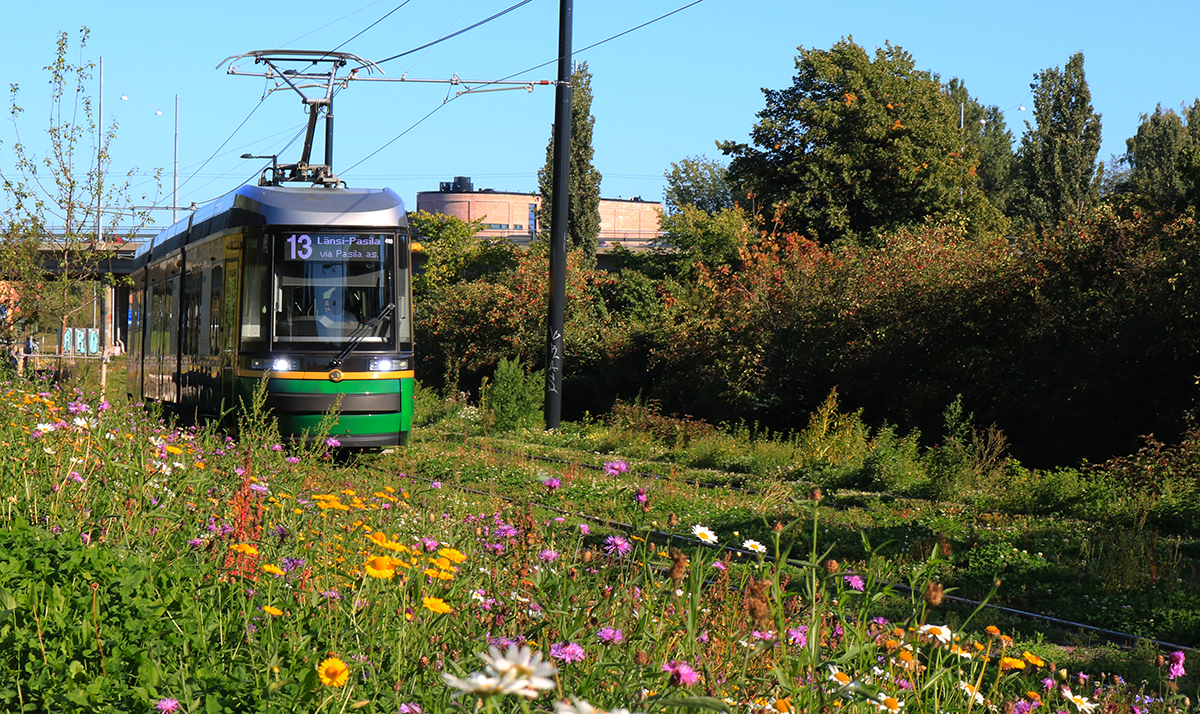
Kalasatama–Pasila – Alliance: Environmental design and an urban park ensemble
In the Kalasatama–Pasila project, the park areas of Nylander Park and Vallila Valley were redeveloped. Näkymä Oy, part of Sweco, was responsible for environmental design within the Karaatti alliance, with the goal of creating a green, diverse, and sustainable urban park ensemble.
The areas were reshaped to integrate the tram line and cycling highway into the landscape, restore the Kumpulanpuro stream, and improve stormwater management. The use of recycled materials, diverse vegetation, and KESY principles strengthened the ecological value of the area and enhanced urban biodiversity.
In the landscape design of Kaisaniemi Park, different stakeholders are heard, history is preserved, and trees are retained
The aim of the renovation of Kaisaniemi Park is to renew the park’s overall appearance and atmosphere while celebrating the different historical layers of this heritage park. Landscape architects at Sweco integrated the history of this valuable urban park with new functionalities and the extensive surrounding construction projects, while preserving the existing tree stock.
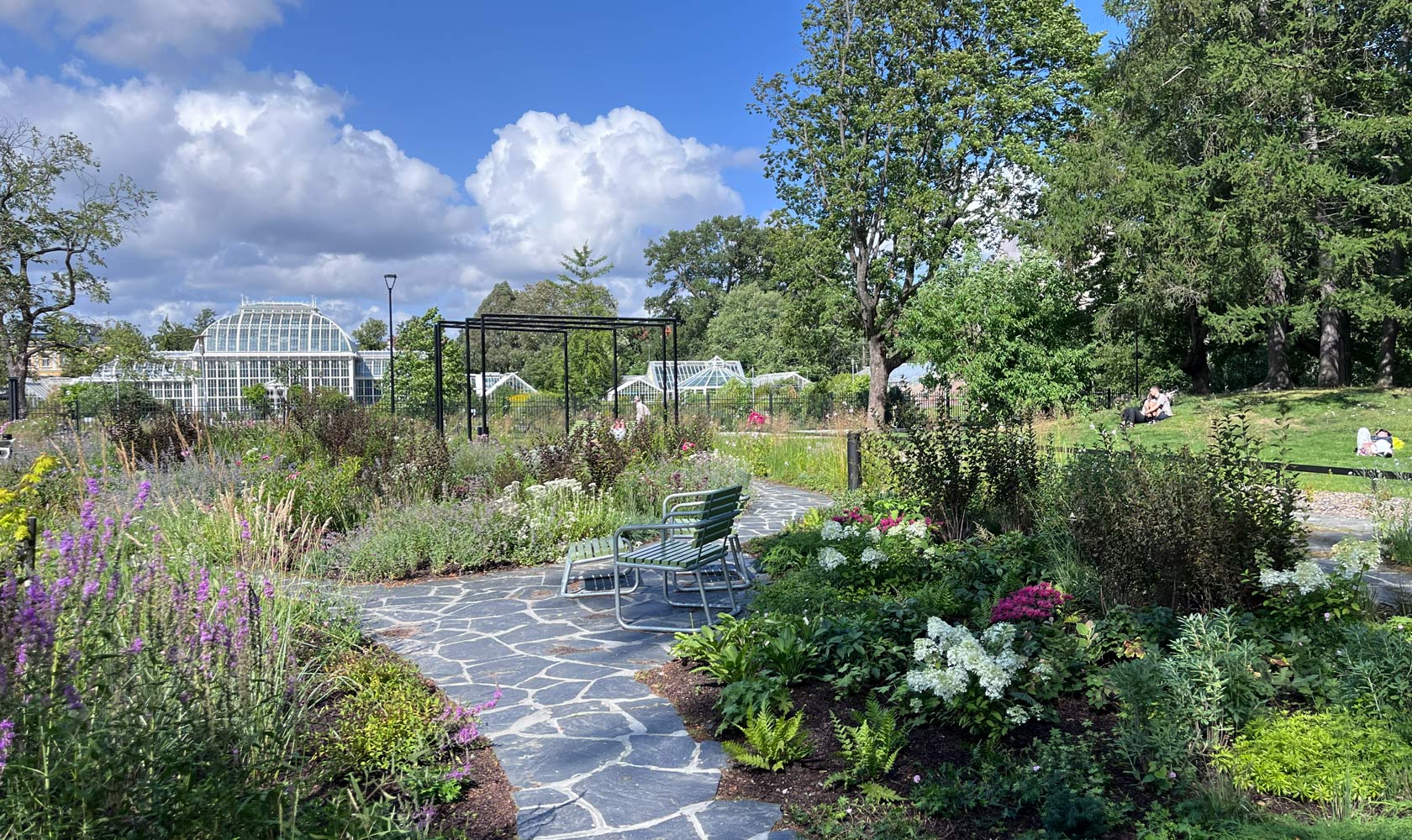
Kaleva traffic park, Tampere
The Traffic Park located in Kaleva Central Park in Tampere was renovated, and a new building serving both users and maintenance functions was constructed to replace the old service buildings. While driving around the park, visitors can spot landmarks inspired by Tampere.
Timanttikiteenpuisto, Vantaa
Timanttikiteenpuisto, located in Kivistö, Vantaa, is a functional and urban park featuring a versatile stormwater channel running through it. The narrow park has been seamlessly integrated with the adjacent Aurinkokivi schoolyard, Lipunkantajanpuisto, and the surrounding plots bordering the park.
Hiitola river restoration, Rautjärvi
We acted as the landscape designer in the removal of three decommissioned hydropower dams on the Hiitola River. The project was selected as the Best Dam Removal in Europe in 2021. The river corridor was also developed as a recreational area. For example, new rest and leisure areas were built along the river, and accessible pedestrian bridges were constructed in place of the removed dams.