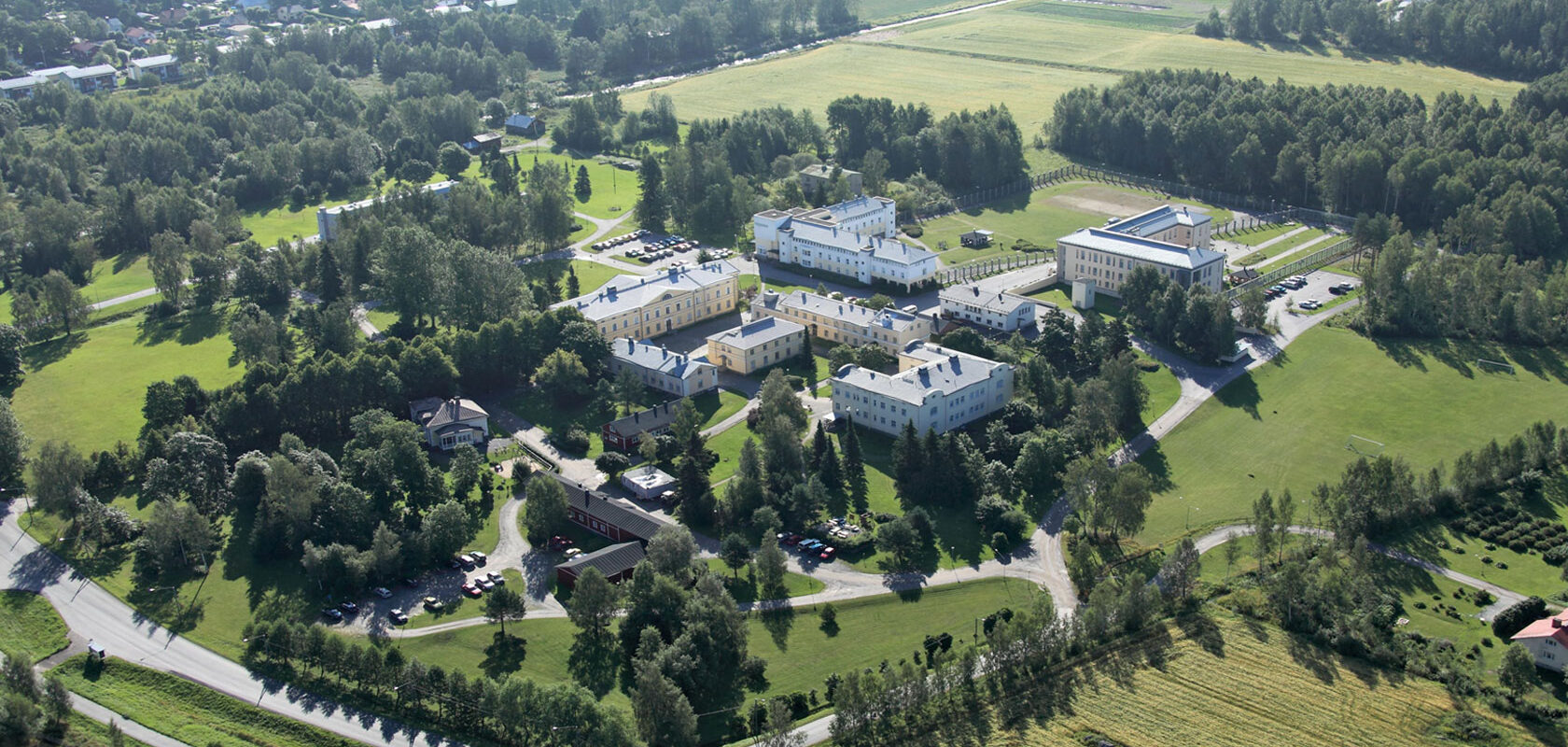
Restoration of the protected buildings at Old Vaasa Hospital begins
Published 2.12.2025
The Old Vaasa Hospital area includes several buildings designed by C. L. Engel, and careful project planning is laying the foundation for their renovation. Sweco’s project management team brings extensive experience in renovating both protected historic buildings and hospitals.
Project planning for the renovation of Old Vaasa Hospital
Old Vaasa Hospital is one of Finland’s two forensic psychiatric hospitals. Senate Properties initiated project planning for the renovation of the area’s oldest buildings together with Sweco’s project management experts. The renovation schedule follows a roadmap prepared for the site.
“The first buildings to be renovated are buildings F and T,” says Kukka Potka, Construction Manager at Senate Properties. Some functions of building F (the main building) and building T (the service building) will be relocated to a new building under construction on the site. This will allow the spaces in the old buildings to be reorganized into functional units. “The main building currently has 25 patient places; after the renovation, there will be 38.”
The hospital serves as a long-term home for about 155 people, and one of the key goals of the renovation is to update the historically valuable buildings designed by Carl Ludvig Engel so the hospital can continue to provide rehabilitation-promoting facilities for patients in the future.
Project in Brief
Renovation of the F and T buildings at the Old Vaasa Hospital
Client: Senate Properties
Services Included in the Assignment: Project planning, including cost estimation and procurement, as well as electrical design
Implementation Period: 2024–2025
Sustainability in the project: Social responsibility, ensuring a rehabilitative recovery environment
Other project themes: Harmonizing heritage values, personal safety, and hospital functionalities with the addition of patient beds and new building systems
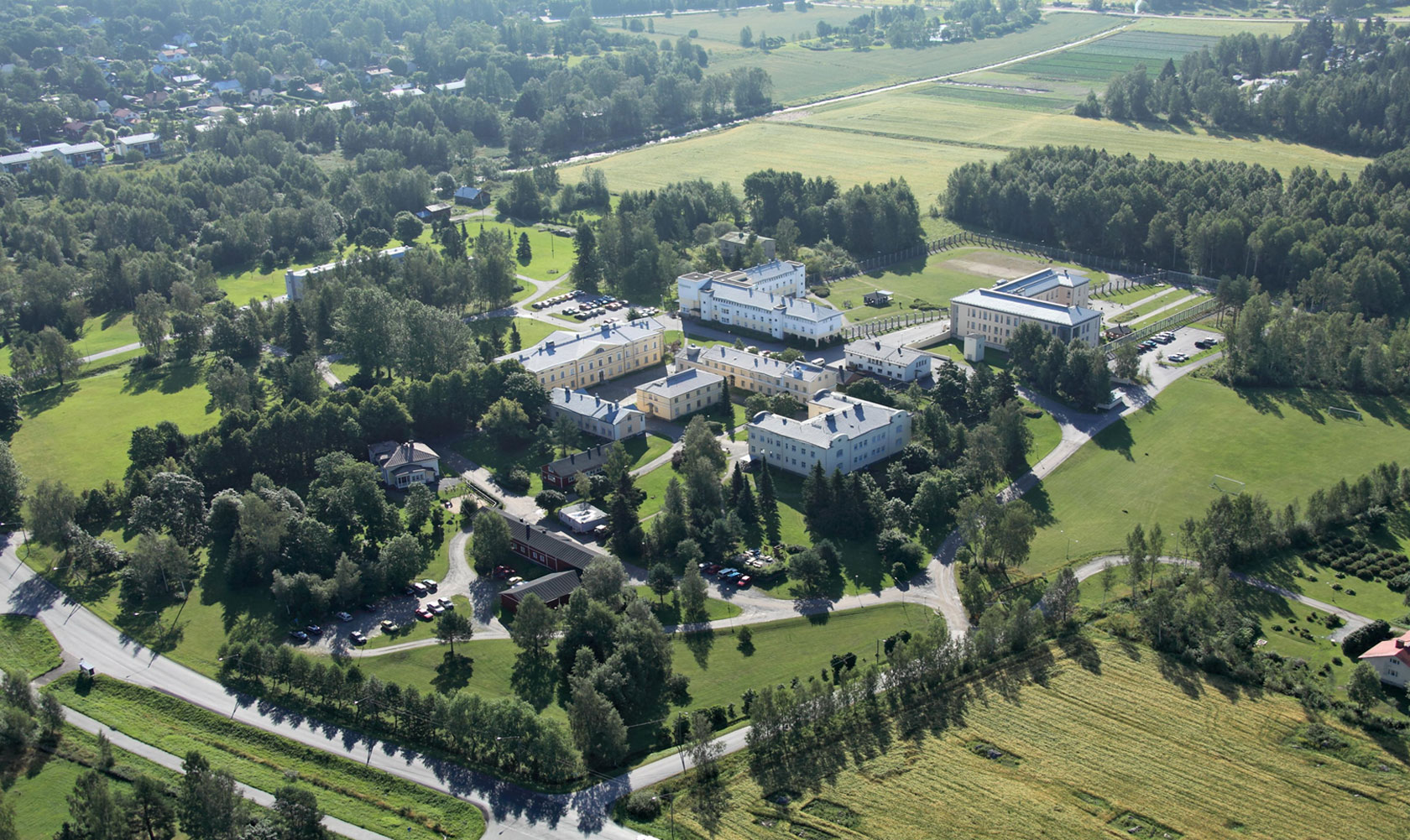
Conservation values guided the planning
Both buildings, completed in 1844, are protected, and the entire hospital area is designated as a nationally significant built cultural environment (RKY). “That’s why it’s important that Sweco has expertise in both hospital functionality and the renovation of protected buildings,” Potka says.
Sweco previously carried out a needs assessment for the T and F buildings and an engagement project related to new construction on the hospital site. According to Project Manager Sini Jaakkola, the most important task was to support the client in decision-making. Many aspects had to be reconciled, from technical requirements to the wishes of the National Board of Antiquities and the users.
“The project spirit was excellent because Senate Properties already has well-functioning procedures and a construction manager who knows the site and users and guides the project proactively and closely.”
The main building will be expanded
Administrative offices will be concentrated in building T, which will also house a laboratory, dental clinic, and physiotherapy facilities. One challenge in renovating building T is that parts completed at different times have different construction types and floor levels.
“By contrast, converting the second floor of building F into a patient ward is more straightforward because it was originally designed as a hospital,” Jaakkola says. The floor plan will retain patient rooms along the windowed sides and the old light-filled corridor alignment.
To make the new second-floor ward functional in daily operations, an extension must be built at the end of the building. Potka considers one success of the planning phase to be finding an extension solution approved by the National Board of Antiquities. The extension will be located at the end of the historic lime-tree alley.
“The extension’s exterior will preserve symmetry and unity with the main building,” Jaakkola explains. The extension will include a lift shaft and stairwells for escape routes and service traffic. “Meals will be prepared in the new building’s central kitchen going forward.”
Project planning reached technical building services details
Sweco’s project management guided the architect, structural and building services designers, and Sweco was responsible for the site’s electrical design. The design guidance emphasized staff and patient safety and certification of the buildings under Rakennustieto’s environmental classification.
“The design team had experience with exactly this kind of building, and they got cooperation running so well that we progressed far with the building services choices,” Jaakkola praises. Representatives of the users also took part in design meetings.
Each patient will have a private room with toilet and shower, which significantly increases the amount of building services. “Fortunately, the ceiling heights are good, and equipment can be placed in service shafts left after the old stove heating,” Jaakkola says.
Sweco’s project management also handled cost calculations, procurements, and preparation of the contract tendering. “We also helped the client choose the contract model. In a demanding renovation like this, some kind of collaborative model is certainly the best solution,” Jaakkola notes.
The project is currently awaiting an investment decision and the tendering of the contract. The aim is to start demolition work in summer 2026.
Also read about the public engagement project for the new construction at the Old Vaasa Hospital!
Picture: Old Vaasa Hospital