Renovated Sibelius Park
Published June 15, 2026. Updated: August 26, 2026.
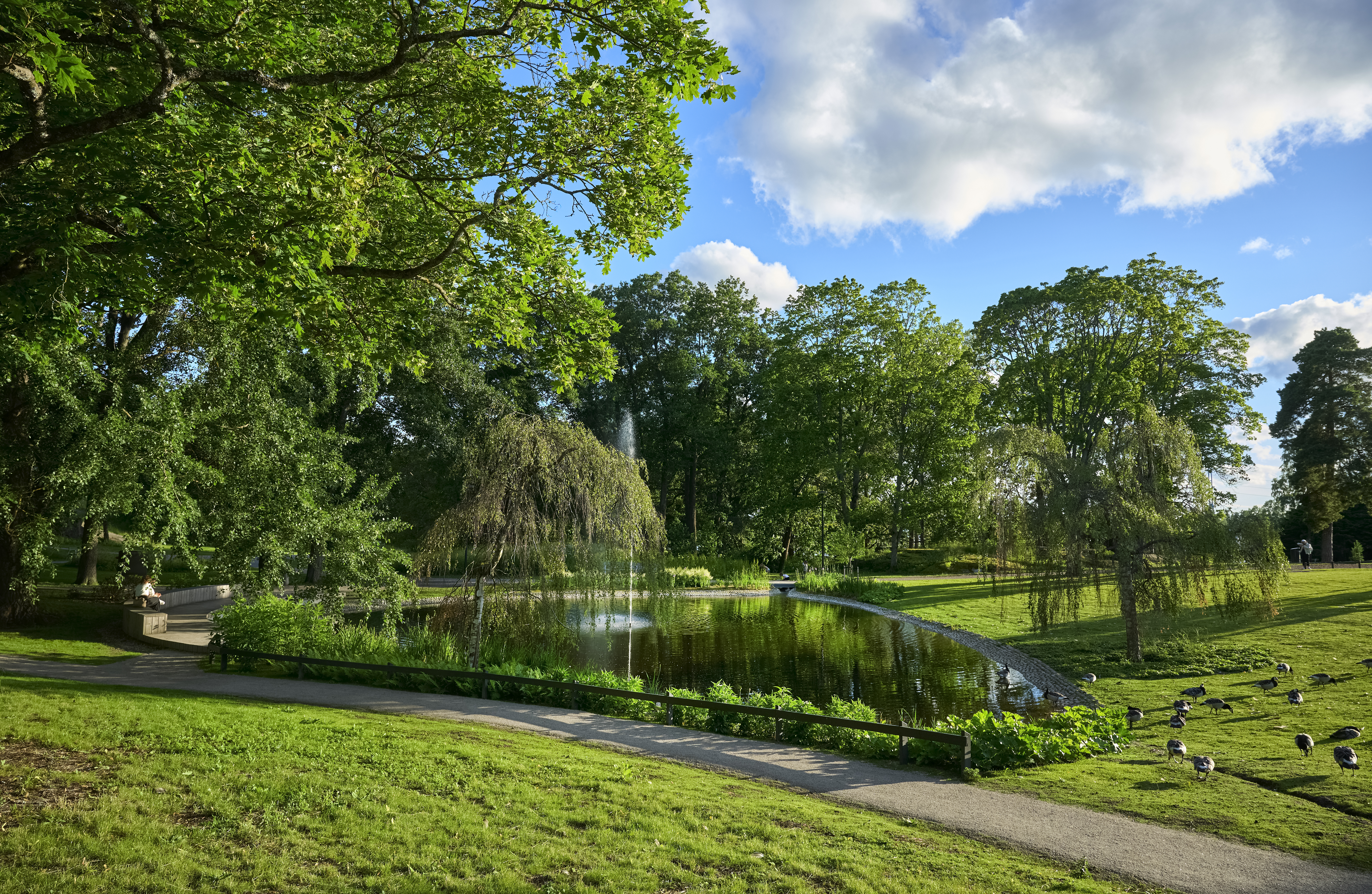
The renovation of Sibelius Park has refreshed both the overall appearance and functionality of this beloved urban park for locals and tourists alike. At the same time, Sweco’s landscape architects highlighted the park’s valuable history and redesigned the arrival experience to the Sibelius Monument.
Landscape design of the Sibelius Park renovation
The seaside Sibelius Park is located in Töölö, Helsinki, on a former villa district that gradually transformed into a public park from the 1930s onwards. The park’s name was established in 1945, although sculptor Eila Hiltunen designed its landmark, the Sibelius Monument, only in 1967.
“What makes Sibelius Park special is its layered history, as well as its dual role as both a popular tourist attraction and a beloved recreational park for city residents,” says landscape architect Matti Liski of Näkymä Oy Landscape Architects, now part of Sweco. He served as the project manager and lead designer for the renovation.
Project in brief: Sibelius Park (Töölö, Helsinki)
Client: City of Helsinki (Urban Environment Division), implementation period: 2019–2025
Services included: principal design and landscape design, including vegetation surveys and visualisations
Sustainability in the project: on-site recycling of soil materials; preservation of trees and vegetation; removal of invasive species; protection of historically and botanically valuable plant species; improved stormwater management and retention (Baltic Sea protection)
The western part of the park was a finalist for the Environmental Structure of the Year 2025 award.
According to Liski, the renovation was needed because many of the park’s functional areas were worn out and had reached the end of their lifespan. The park environment had also not been designed for the current number of visitors. “Near the Sibelius Monument, the lawns had been worn down completely to bare soil.”
The renovation works carried out between 2023 and 2025 aimed to improve the park’s comfort and to find a balance between a culturally and historically valuable park and the demands of a tourist destination.
“We wanted to uncover valuable old park features hidden beneath layers of time, while at the same time updating the monument surroundings to withstand the thousands of daily visitors during the summer season.”
A vegetation inventory guided the landscape design of Sibelius Park
The park design began with a light preliminary planning phase, followed by a vegetation inventory. Its purpose was to map the park’s tree and herbaceous vegetation.
“There is a large amount of original, historical, and botanically valuable plant species from different periods in the park,” Liski says. Some plant layers date back to the villa era. “The inventory helped define, for example, visually significant and noteworthy plants as a starting point for the design.”
Sustainable environmental construction in an urban park
According to Liski, the theme of sustainable environmental construction was evident in everything. Only the trees and plants in the poorest condition were removed, and the trunks of felled trees were left in the park as deadwood habitats. Plants were also relocated to better growing sites.
“New trees were planted along flying squirrel routes, and an old aspen grove was also preserved for the squirrels. At the same time, the natural detention area for stormwater flowing off the cliffs was retained,” Liski explains.
The most worn lawn areas and ornamental plantings around the Sibelius Monument had to be largely renewed. “Otherwise, the lawns could be preserved and only restored,” Liski says. Harmful invasive species were removed, and the new plants are mainly native. “For example, more than 50,000 bulbs were planted, enhancing the park’s spring appearance and providing important resources for early pollinators.”
Recycling was prioritized in the handling of soil materials. Recycled growing media were used in the park, and topsoil was reused after screening, for example in lawn areas. “In addition, the excavated soil masses could be utilized in the park’s cultivation and meadow areas, where a hollow was raised by approximately 1.5 meters.”
Sibelius Park functions in stormwater management
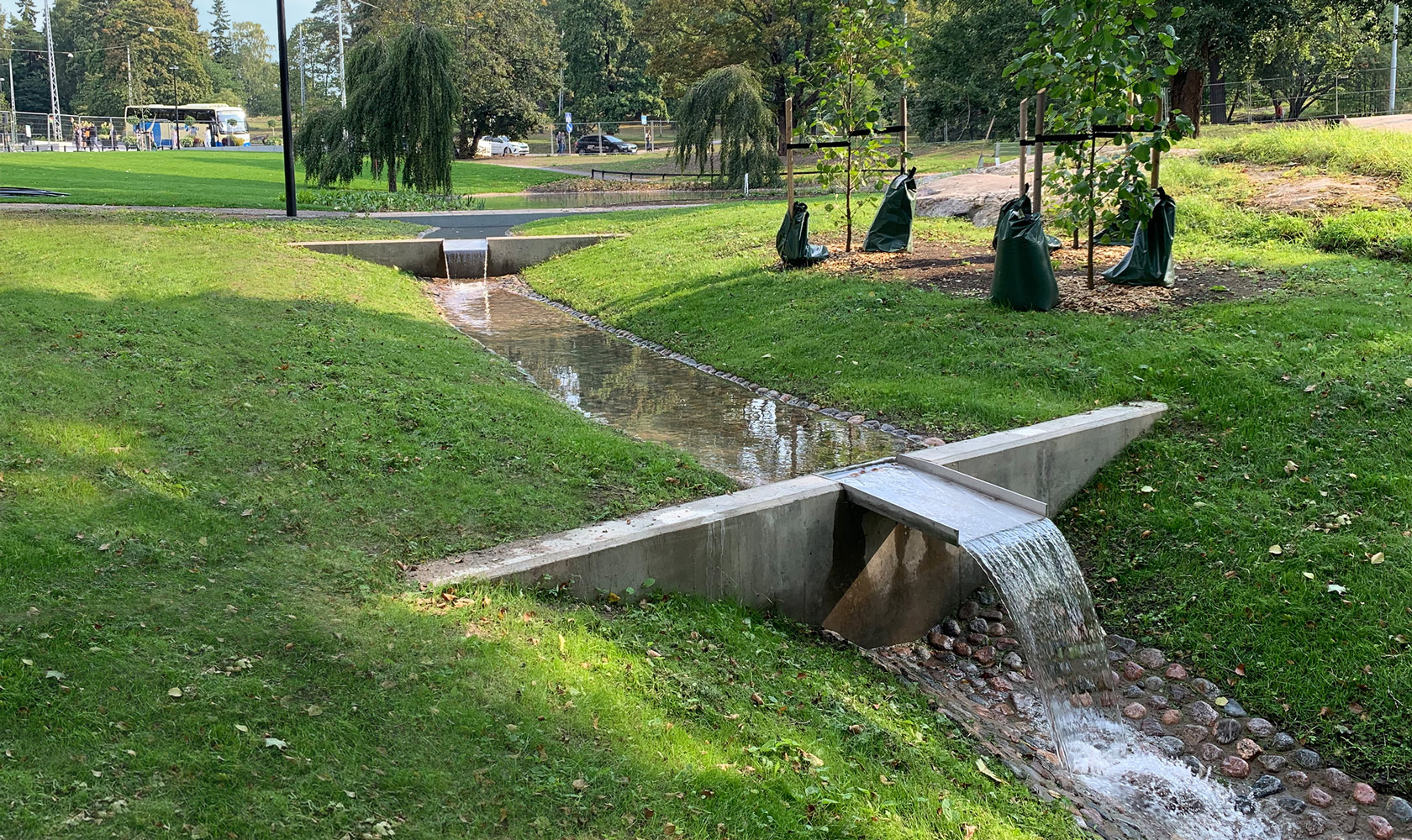
The park’s water conditions were enhanced by infiltrating most surface water into the ground. According to Liski, stormwater is also directed into the park’s stream from Mechelininkatu. “An infiltration field and underground infiltration units ensure that stormwater from the street does not flow directly into the Baltic Sea.”
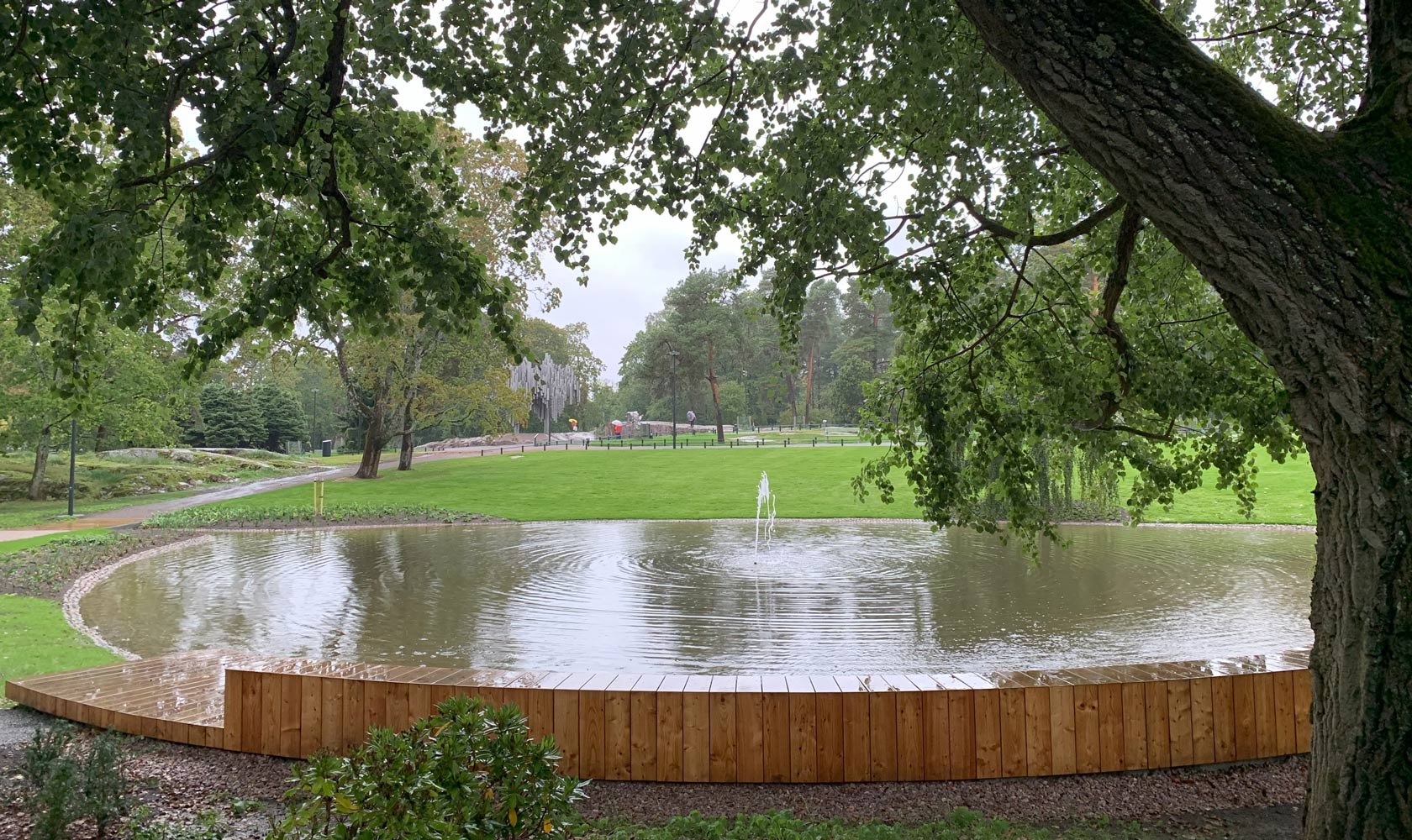
The ornamental pond with its fountain, built in the 1950s, was fully restored. A new lower pond was connected to the upper pond by a stream and two weir basins.
“The impressive water circulation system with waterfalls can be admired from a wooden terrace, which also offers a view of the monument. People have quickly embraced it.”
A new network of paths leads to the Sibelius Monument
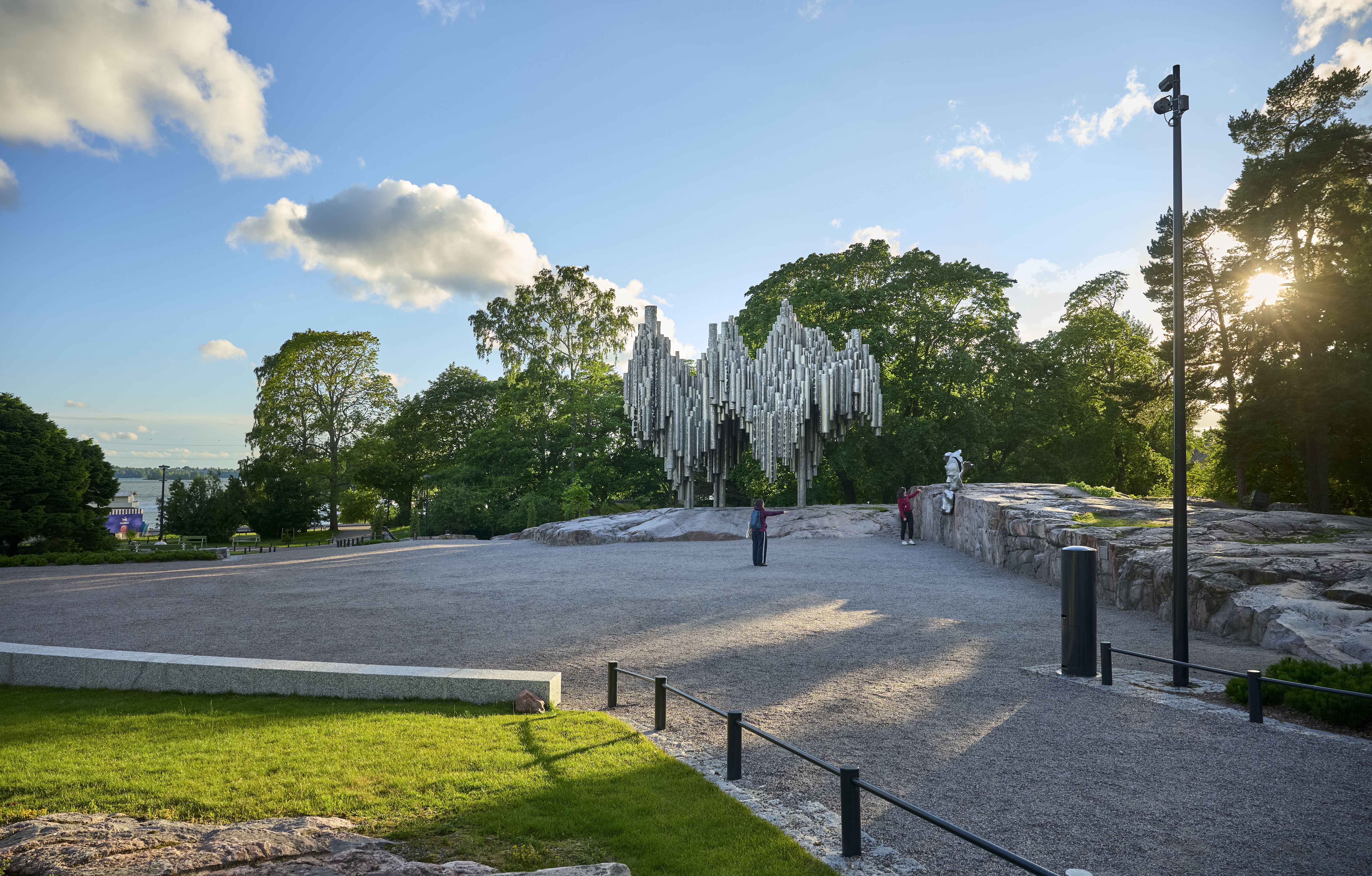
The surroundings of the Sibelius Monument were not originally designed in the 1960s to guide people directly to the attraction, but in the renovation the monument axis was integrated into the valuable framework created by the park.
“New entrance plazas on Mechelininkatu and Merikannontie were designed with a distinctive paving made of round domestic natural stones,” Liski says.
The plazas are bordered by low natural stone walls that cannot be crossed. “The walls guide tourists along a network of curving paths reminiscent of the villa era toward the monument, which protects the park’s green environment,” Liski explains. The walls also provide convenient seating. “New picnic groups on the lawns have proven very popular right away.”
An urban park offering activities for local residents
For residents, a functional area has been built in the northern part of Sibelius Park, including a playground and outdoor fitness equipment. The entire playground was renewed, with its forms and equipment inspired by the Sibelius Monument. Other facilities include a dog park for small local dogs and frisbee golf baskets. Conditions for urban gardening were improved by expanding the raised-bed area to a nearby meadow.
“The area has now been designed as part of the park landscape, and in summer gardeners are served by a water point and picnic groups where they can rest on hot days,” Liski says.
The monument axis has been implemented as a high-standard accessible route, and overall accessibility in the park has also improved thanks to winter maintenance and new lighting. The park can now also be accessed through two new entrances.
“A new entrance route has been opened from the southeastern corner of the park on the city side, and another new entrance runs from the corner of Merikannontie and Kesäkatu across the cultivation area,” Liski explains.
The renovation of the western part of Sibelius Park was a finalist for the Environmental Structure of the Year 2025 award.