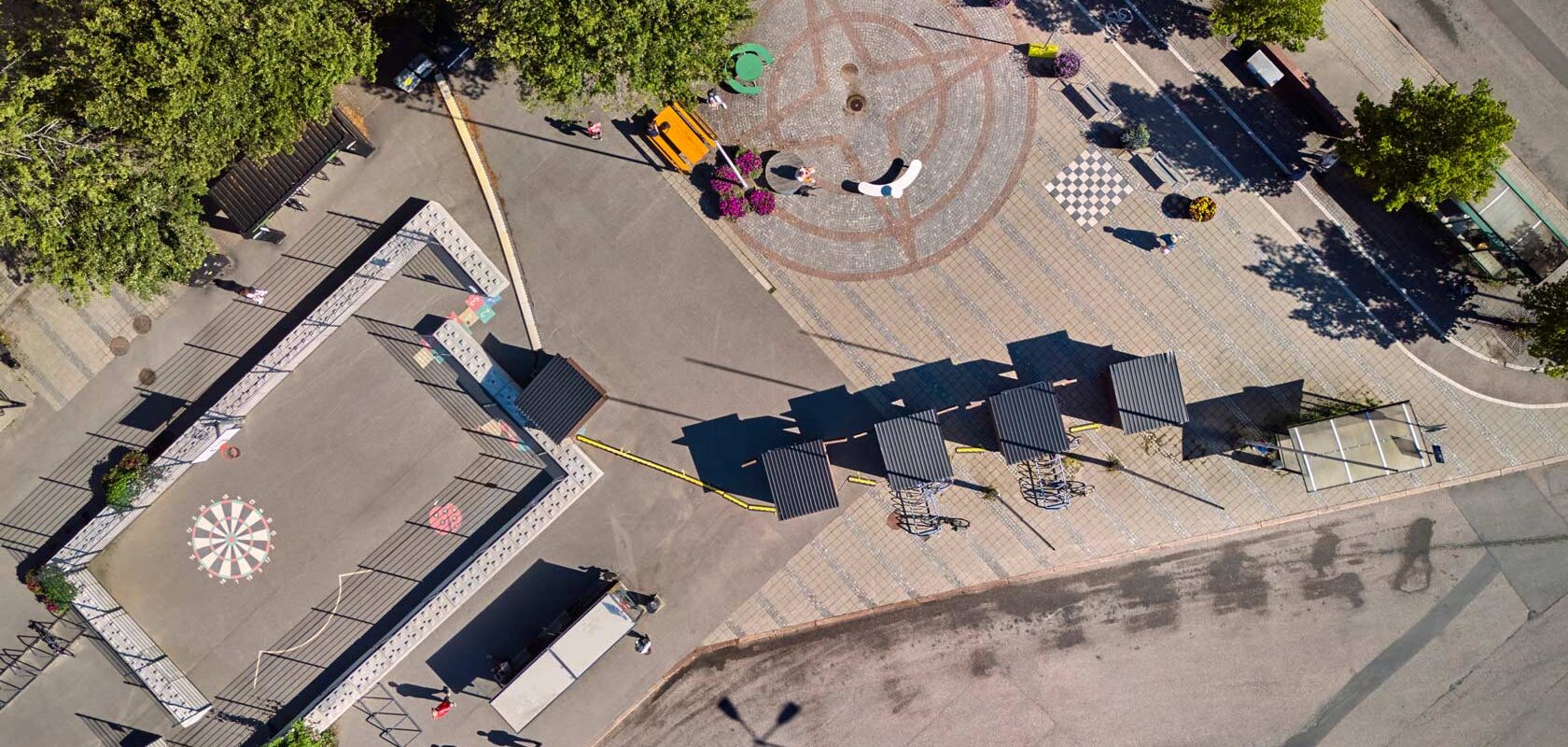
Porvoo pop-up summer square brings activity and community life to the city centre
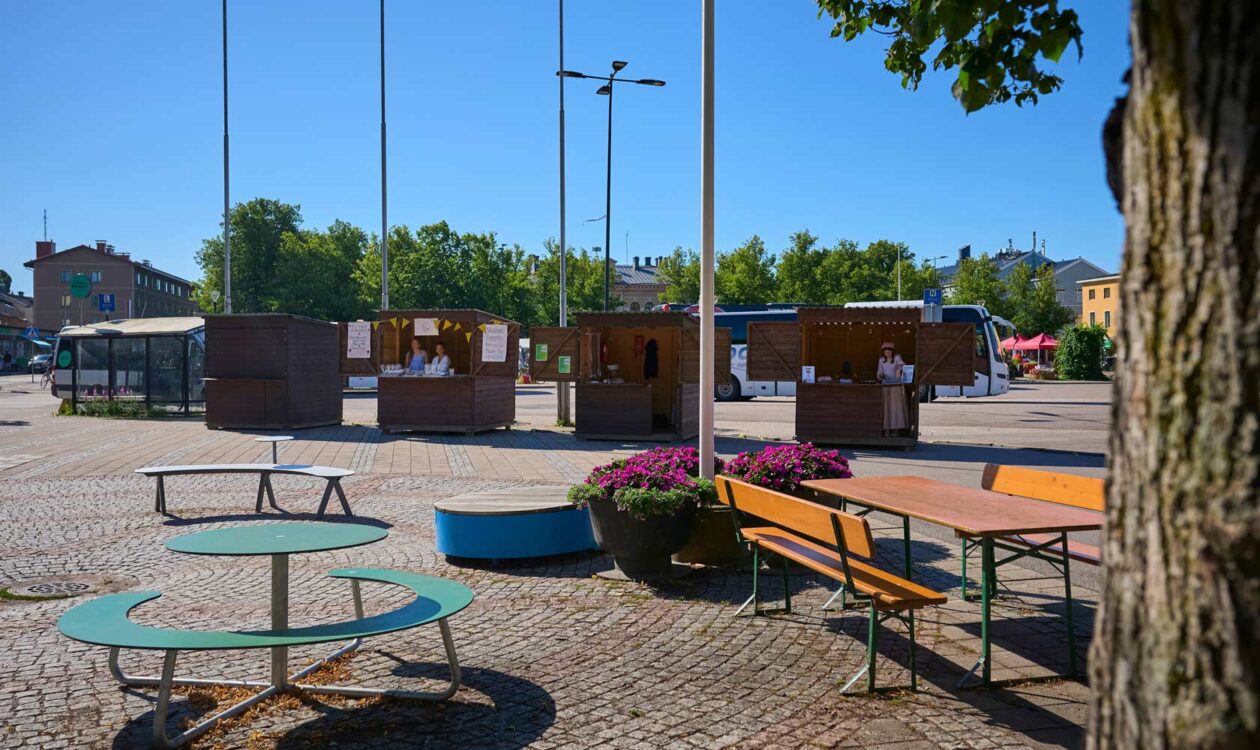
The City of Porvoo has taken the first step towards revitalising its market square by creating a temporary summer destination offering activities, social spaces and new opportunities for young people. The project used recycled urban furniture, circular-economy solutions, and community-led design in the temporary market square. Sweco’s landscape architects and urban planners worked closely with the city to turn young residents’ ideas into reality.
The visioning work for Porvoo city centre continued with the landscape design of a temporary pop-up market square
A temporary pop-up market square was quickly created in the heart of Porvoo for the summer of 2026, enhancing the attractiveness and vibrancy of the city centre. The city has long-term plans to redevelop the main market square, and in the meantime it wanted to provide activities and opportunities, particularly for young people.
“The wishes of young people emerged during the Porvoo City Centre Development Vision 2026-2035 project, in which we were responsible for urban planning,” says Filemon Wolfram, Urban Planner at Sweco.
Ideas for the content and activities of the pop-up market square were also gathered through a participatory budgeting survey targeted at young residents in 2026.
“The city wanted to do something for the market square right away, because young people are young now.”
Landscape architects supported the flexible planning of the pop-up square
With only a couple of months available to deliver the pop-up square, Sweco’s landscape architects embraced the challenge with enthusiasm. Time was set aside for project coordination, as it was clear from the outset that the scope of the assignment could not be defined in detail.
“We focused on the desired outcome and adapted to the client’s needs as the project progressed,” says Wolfram. Sweco’s experts also responded flexibly to emerging needs, for example by preparing the emergency plan required for the event.
The client’s wishes — and the means to deliver them — had to be identified quickly. “We contacted several different suppliers to map out solutions that could be implemented rapidly without having to excavate the asphalt surface,” highlights landscape architect Sofia Tigerstedt.
Second-hand furniture enabled a cost-effective pop-up square
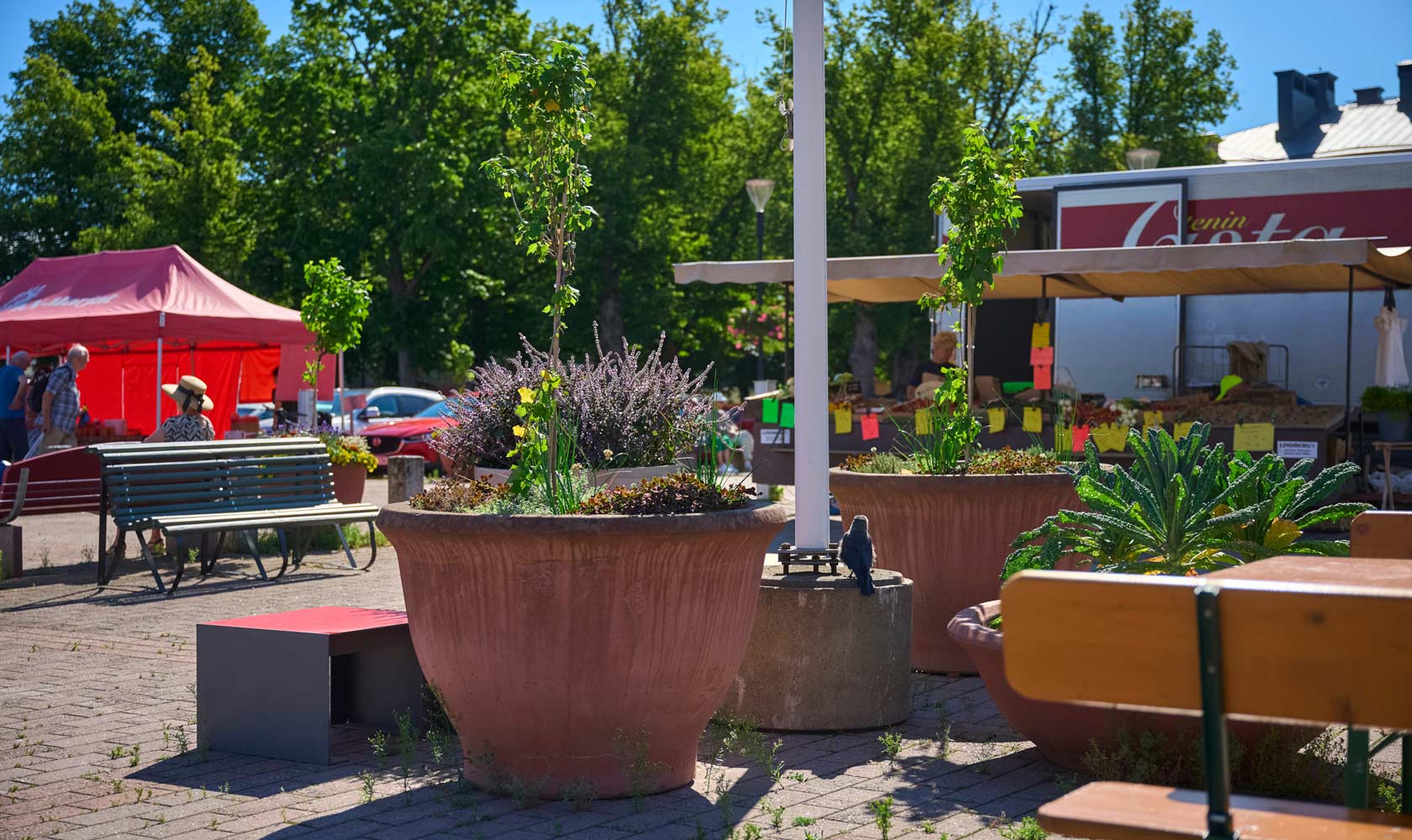
In addition to the tight schedule, one of the key requirements was that the summer square had to be delivered through low-cost measures. No separate budget was available, so the furniture was sourced second-hand, recycled or borrowed.
“We found usable benches and planters in the city’s storage facilities, while picnic table sets were rented,” says Tigerstedt.
Circular economy principles were also reflected in a chessboard made from concrete paving slabs. With support from the city’s infrastructure team, young people refurbished large chess pieces found in storage. “They were originally too light, so they were filled with sand.”
The pop-up square brings young people’s wishes to life
Young people hoped to have a basketball court at the square. Delivering it required balancing opportunities for play with traffic safety, as the summer square’s public areas are located on both sides of the bus station. The court is situated in front of the Lund shopping centre, next to a cycle route.
“A creative solution was found for fencing the basketball court: concrete blocks from the city infrastructure depot provided a safe surface-mounted foundation for the fence,” says Tigerstedt. The fencing can be dismantled after use and reused elsewhere.
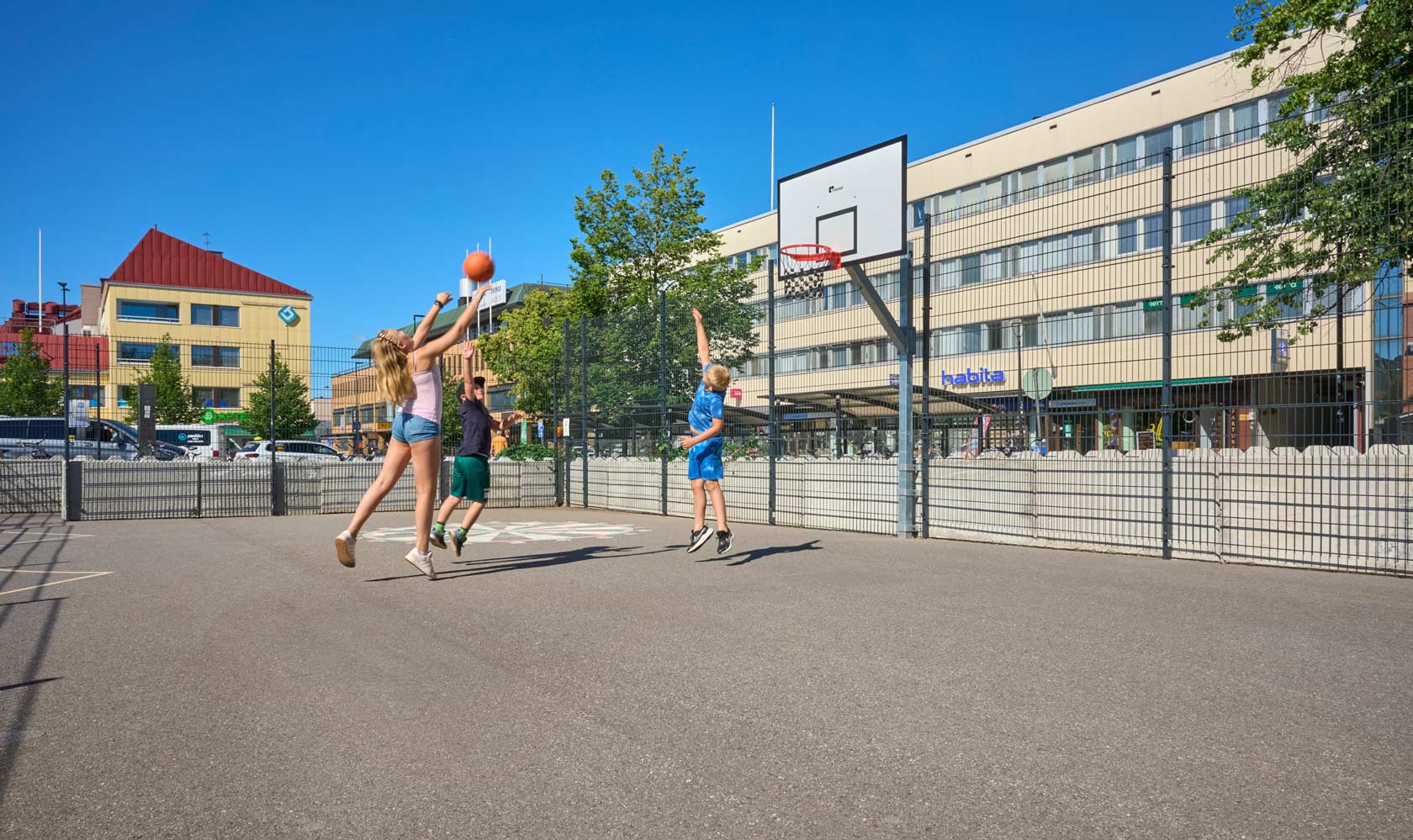
The basketball enclosure proved to be one of the pop-up square’s most popular features. “That is great, because young people have so far been underrepresented at the square,” Wolfram says with pleasure.
Children were also considered in the design. In Wolfram’s view, urban planning should leave room for children’s creativity, meaning that expensive, ready-made play equipment is not always necessary. “Ground markings, colourful tables and climbable benches made the space itself playful and inviting for play.”
The pop-up summer square showcased Porvoo’s community spirit
Porvoo was named Finland’s City Centre of the Year in 2026, with collaboration between different stakeholders among the assessment criteria. The city’s strong community spirit was also evident in the delivery of the pop-up square.
“Although the project did not clearly fall within anyone’s specific remit, we succeeded in involving many people. Collaboration was smooth between our team, the client and the city’s various stakeholders,” says Wolfram.
Tigerstedt particularly praises the city infrastructure team’s practical, can-do approach. “Despite the tight schedule, they took responsibility for the square’s practical delivery, from procurement to refurbishing the furniture.”
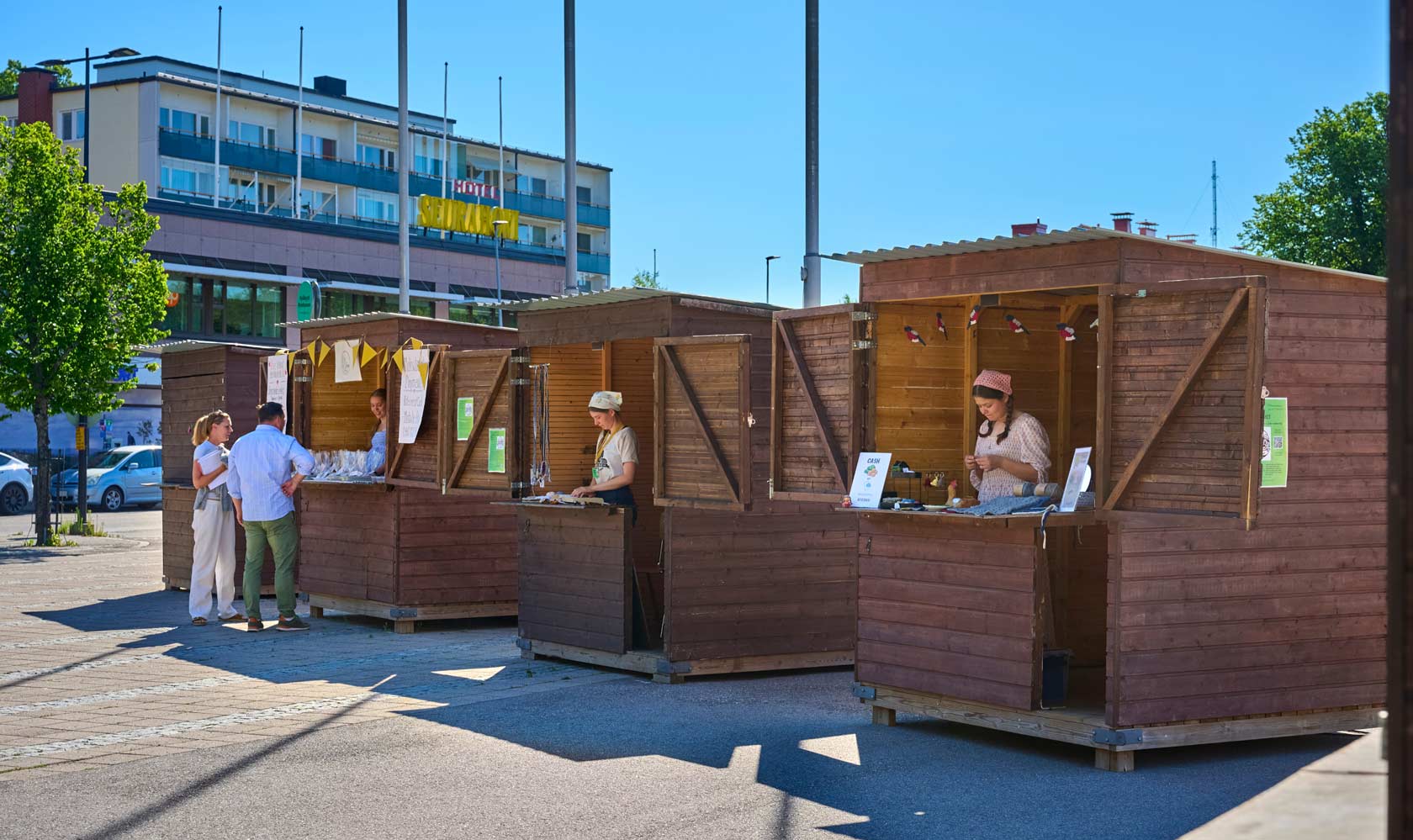
The city’s youth services contributed to developing the concept, and youth workers were on site in June to engage young people and lend out board games and outdoor games. The local 4H association, in turn, gave young people the opportunity to try market entrepreneurship and reserve market stalls.
“For example, baked goods sold well among older visitors, making the square a bridge between generations,” Wolfram adds. Rest and seating areas surrounded by summer flowers were enjoyed by people of all ages.
The first step in revitalising Porvoo market square
The first step in revitalising Porvoo market square
Creating vibrant urban spaces is always a process rather than a one-off project, and Porvoo has now taken its first important step. “I hope this creates a snowball effect and raises awareness that everyone is welcome to take ownership of urban space,” says Wolfram.
The city collected feedback, and many respondents supported continuing the experiment. There are hopes, for instance, to continue the basketball court and kiosk initiatives. Planning will continue together with young people, who would like to see features such as live music and a small performance stage at the square.
Discover our projects
Tampere passenger railway yard
Tampere’s passenger railway yard is being renewed to meet the needs of Finland’s busiest rail transport hub. Sweco is responsible for the architectural design and lead design of the station area in a project that will improve the passenger experience, accessibility and the appeal of the station district as part of Tampere’s wider urban development.
Ilmalankeidas – pop-up square
Ilmalankeidas brought new vitality to Ilmalantori Square, which had seen little use. Delivered through collaboration between businesses, the city and urban landscaping professionals, the pop-up square increased urban greenery through circular-economy solutions and tested a new model for revitalising urban space.
Urban cycling continues to gain popularity
Helsinki’s city bike scheme has grown into one of the world’s most widely used bike-sharing services. Sweco has been responsible for planning station locations since 2016 and has helped develop a service that supports sustainable mobility, public transport journeys and a more pleasant urban environment.
Ruskeasuo depot
The Ruskeasuo depot Sweco used BIM-based carbon footprint calculation in the Ruskeasuo depot project to inform design decisions and support lower-carbon construction choices.
Guide to network asset management for water utilities
The long-term development of water supply and wastewater networks requires knowledge-based asset management. Sweco prepared a guide for the Finnish Water Utilities Association to help water utilities manage the lifecycle of their networks, prioritise investments and safeguard the reliability of services in a changing operating environment.
Strategic Sustainability Consulting for urban development
Sustainable urban development requires strategic choices whose impacts are reflected in decision-making, investments and project delivery. Sweco’s strategic sustainability consulting supports cities and municipalities in developing plans and measures for climate, biodiversity, resource-efficiency and circular-economy goals. We support our clients with sustainability strategies, carbon and sustainability management, roadmaps, indicators and reporting—ensuring that targets do not remain on paper but guide everyday decisions.
We support clients with sustainability strategies, carbon and sustainability management, roadmaps, indicators and reporting, and we help them prioritize measures based on impact, cost and feasibility.