Water and flow analyses
Water and Flow Analyses
Water and watercourse flow analyses virtually examine how water interacts with the natural or built environment. Typical analysis targets include dam structures, rivers, industrial plants and applications, as well as wastewater treatment plants. Water and watercourse flow analyses provide valuable and detailed information about water flow that can be used in design.
How does CFD work?
Computational Fluid Dynamics (CFD) is a mathematical simulation method used to solve the flow of gases or liquids and their properties.
Why use CFD?
CFD provides information for decision-making and enables valuable, detailed insight that is difficult or impossible to obtain otherwise. This information supports better solutions and offers significant economic savings potential.
Areas of expertise in water and watercourse CFD
CFD simulations (RANS, URANS, SAS, DES)
- Multiphase flow analysis (e.g. water-air systems)
Air mixing into water
Mixing and non-mixing systems
- Flow capacity analysis
Rivers and dams
- Contaminant/additive dispersion analysis
Water pollution control
Cleaning of water basins
- Mixing and separation analysis
Water basins
Industrial systems
- Pressure loss analysis
Total pressure loss
Pressure loss components (friction, etc.)
- Water level elevation analysis
Flow-induced water levels
Rivers, harbours and dams
- Application/component analysis
Cavitation risk
Pressure losses
Detailed flow patterns
- Structural loads caused by water flow
Dams and high flow velocities
Harbours
- Wave analysis
Water basins and swimming pools
Harbours
We offer CFD services broadly for a wide range of applications.
Explore examples of CFD:
CFD services for data centre design
Explosion and blast wave analyses
Wave analyses
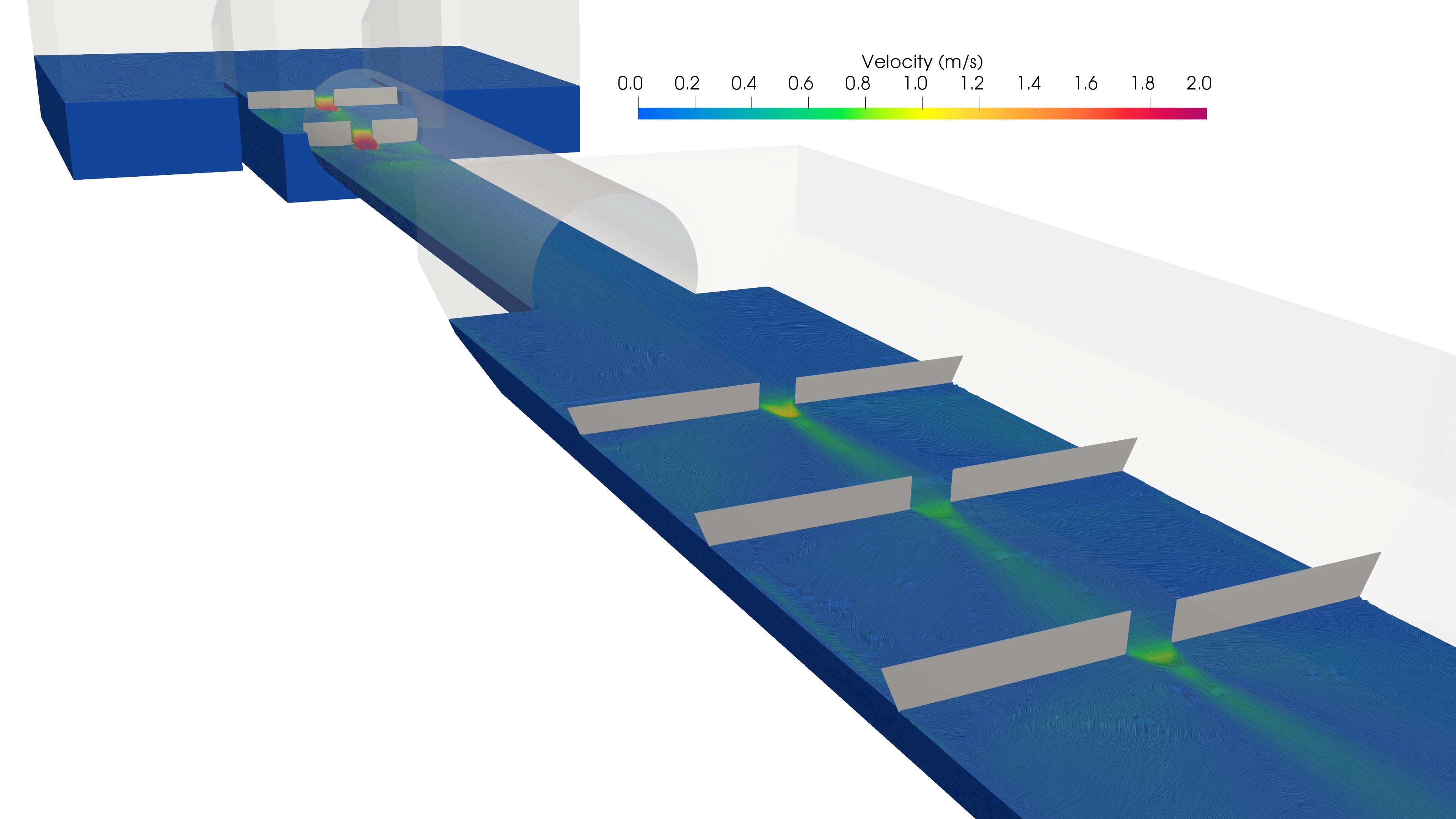
Discharge flow analyses
Multiphase (water-air) flows
Structural loads caused by water flow
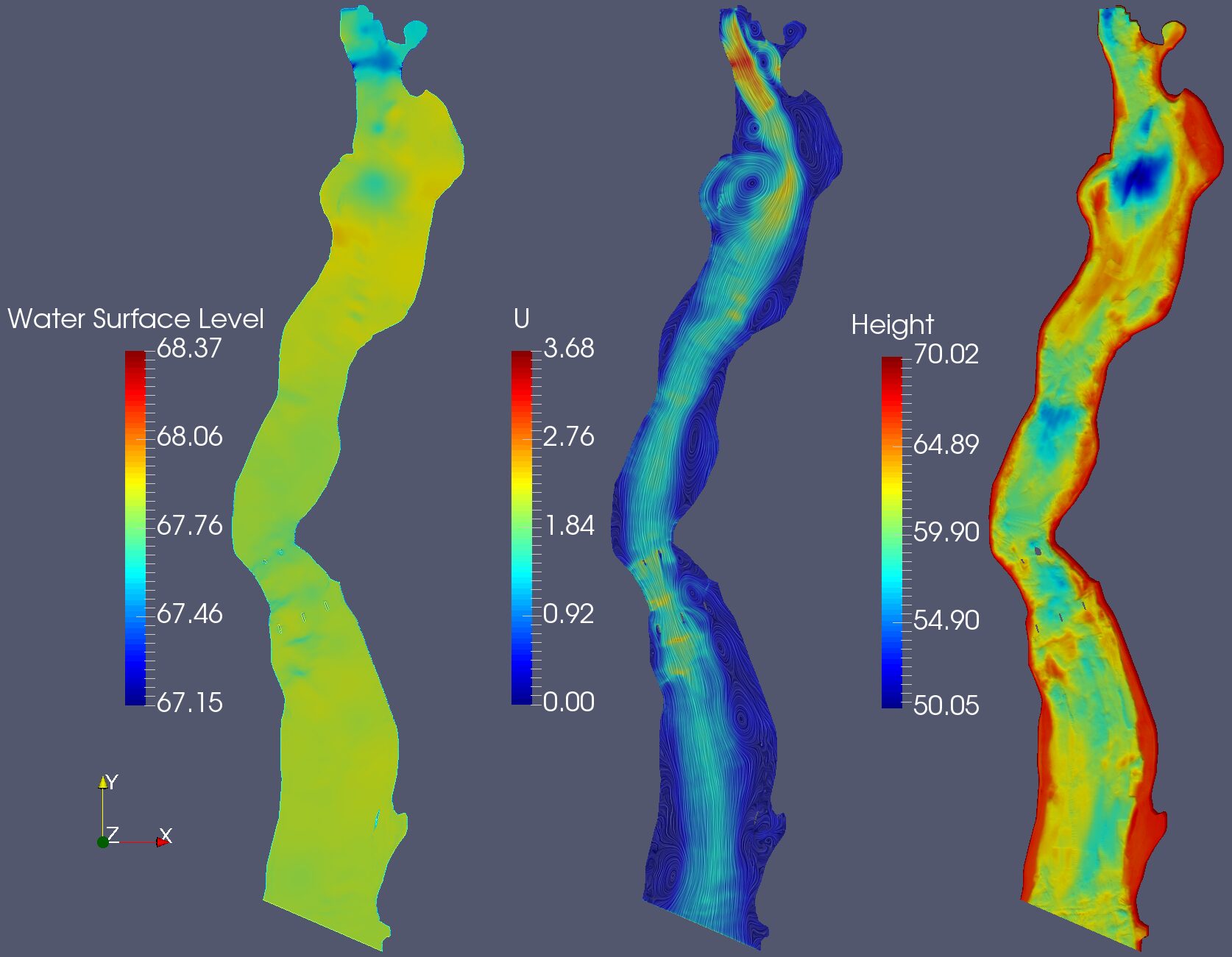
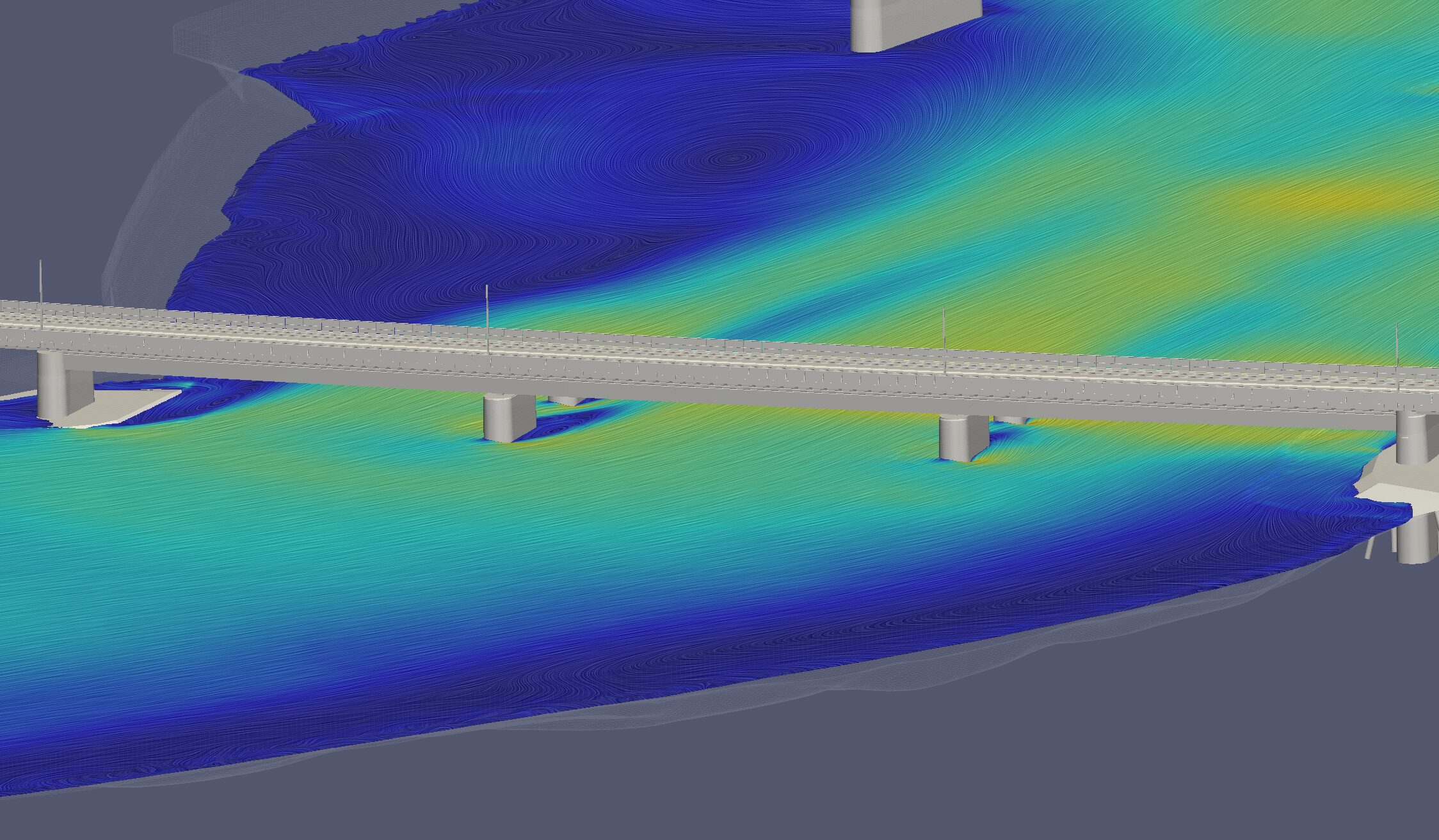
River flow field and water level elevation analyses
Eero Kokkonen
Department Manager, Chief CFD Engineer