Building permit for a data center secured through seamless collaboration under a tight schedule
Published June 16, 2026
The building permit process for AmpTank’s data center project was allocated only three months. Sweco’s lead designer and a broad design team committed to the schedule from the outset—and succeeded through close collaboration. Construction of Northern Ostrobothnia’s first data center in Utajärvi is set to begin in 2026.
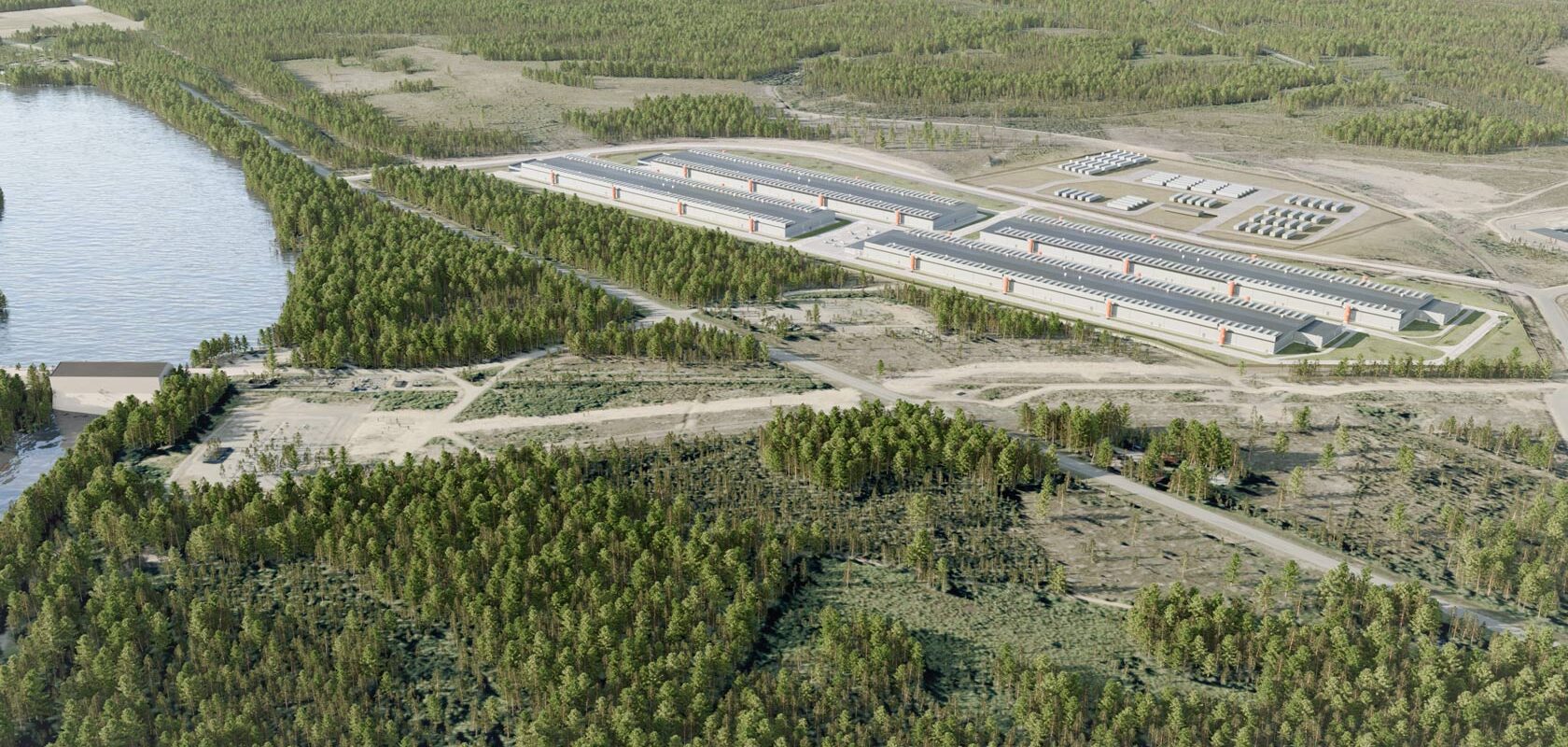
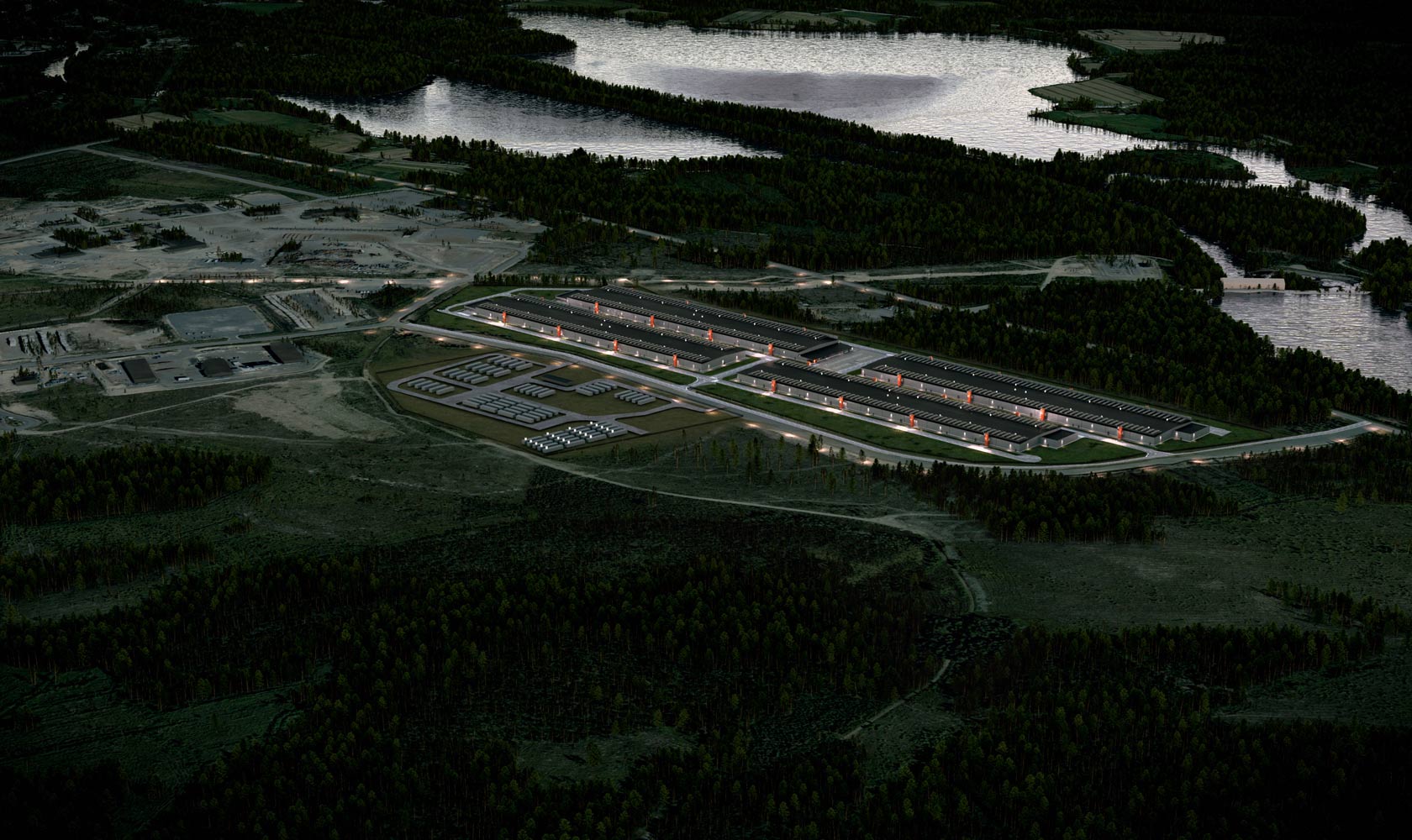
Concept design for AmpTank’s data center
Swiss-Finnish AmpTank group companies Data Tank AG and its subsidiary Data Tank Nordic Oy act as developers in the data center project, which aims to deliver the first data center in Northern Ostrobothnia to reach the construction phase in 2026.
“We chose to invest approximately two billion euros in the Mustikkakangas industrial area in Utajärvi due to the availability of local renewable energy,” says Hannu Koivusalo, Chairman of the Board at AmpTank Finland Oy.
Utajärvi hosts the over 100 MW Isosuo solar power plant, and as a HINKU municipality, it also has plans for wind power development. Seven wind power projects are currently being prepared in land use planning, and the local data center investment plays an important role in advancing them.
AmpTank’s consulting partner Sitema Oy contacted Sweco’s data center experts once the preliminary site location—60 kilometers from Oulu in Utajärvi—was identified.
“We needed a lead designer, an architectural designer, and a noise specialist to support the building permit process for the data center and to carry out noise studies,” says Jari Tuomaala, Business Area Director at Sitema Oy.
Sweco’s Data Center Design Lead Kalevi Saarela immediately began discussions with the local building control authority and defined in detail the design deliverables and specialist disciplines required for the data center project’s building permit.
“In the end, the building permit required plans covering almost all technical disciplines—from structural and building services engineering to stormwater management, fire safety, and traffic planning.”
AmpTank data center (Utajärvi) in brief
Sweco’s client (commissioning party): Sitema ltd
Developer / Project developer: Data Tank AG / Data Tank Nordic ltd
Services included in the assignment: lead design, architectural design and noise studies, as well as, under additional agreements, structural, electrical, HVAC and building automation design, cooling system design, fire safety design, stormwater design, traffic planning and geotechnical design
Year of implementation: 2025–2026
Other key highlights and facts: the first data center project in Northern Ostrobothnia to proceed to the construction phase
Data center concept design completed within three months
Although the overall design scope was extensive, progress needed to be rapid. Only three months were allocated for securing the building permit, even though the data center initially had neither a property ID nor a land lease agreement with the municipality.
“When the concept design phase began, the permitting authority considered the schedule impossible, but step by step we were able to move things forward,” Saarela says.
As the lead designer, he was responsible for managing and coordinating the entire design process. Fast response times, an understanding of the data center business, and a customer-oriented mindset were required from all Sweco experts. “Fortunately, our experts are proactive and naturally oriented towards supporting the client,” Saarela notes.
The three-month timeline was ultimately met, and Saarela credits all parties involved—from Sitema to the local authorities. “Everyone was aware of the goal and the constraints, and we actively worked together to find solutions that would allow us to succeed,” he continues.
According to the client, Sweco’s greatest added value was its ability to collaborate effectively with all stakeholders, despite the demanding schedule. “Cooperation was smooth and effortless, and Sweco’s team was fully committed to supporting our success,” says Tuomaala.
Space requirements and environmental factors were key in concept design
Although the end user of the data center has not yet been confirmed, space reservations for technology and buildings had to be defined. The 10-hectare site will accommodate four buildings, one of which will include office spaces. The approximately 200 MW data center facilities will cover nearly 87,000 gross square meters, equivalent to roughly 12 football fields. The buildings extend over 300 meters in length.
“Even though the buildings are single-story, their ridge height exceeds nine meters—comparable to a three-story residential building,” Saarela explains. With a total volume exceeding 700,000 cubic meters, the building mass would correspond to a 100-meter-thick layer of earth covering a football field. “Even a truck looks tiny in comparison—like a ladybug.”
According to Saarela, the noise study influenced the placement of different functions on the site. The area will include an electrical substation, a water reservoir, and a fire safety pumping station. Uninterrupted power supply is ensured by backup generators, which produce noise not only during power outages but also during testing.
“Noise control also had to consider the large condensers required for the hybrid cooling system, which combines air and liquid cooling for the data halls,” Saarela adds. In addition, stormwater management required careful planning, as the Oulujoki River flows close to the site.
At the end of the project, Data Tank AG entered into a framework agreement with Sweco, facilitating future collaboration both in Utajärvi and in other AmpTank data center projects.
“Sweco’s work was highly professional and efficient, and we are definitely interested in using Sweco’s expert services in the next phases of the project as well,” Koivusalo concludes.