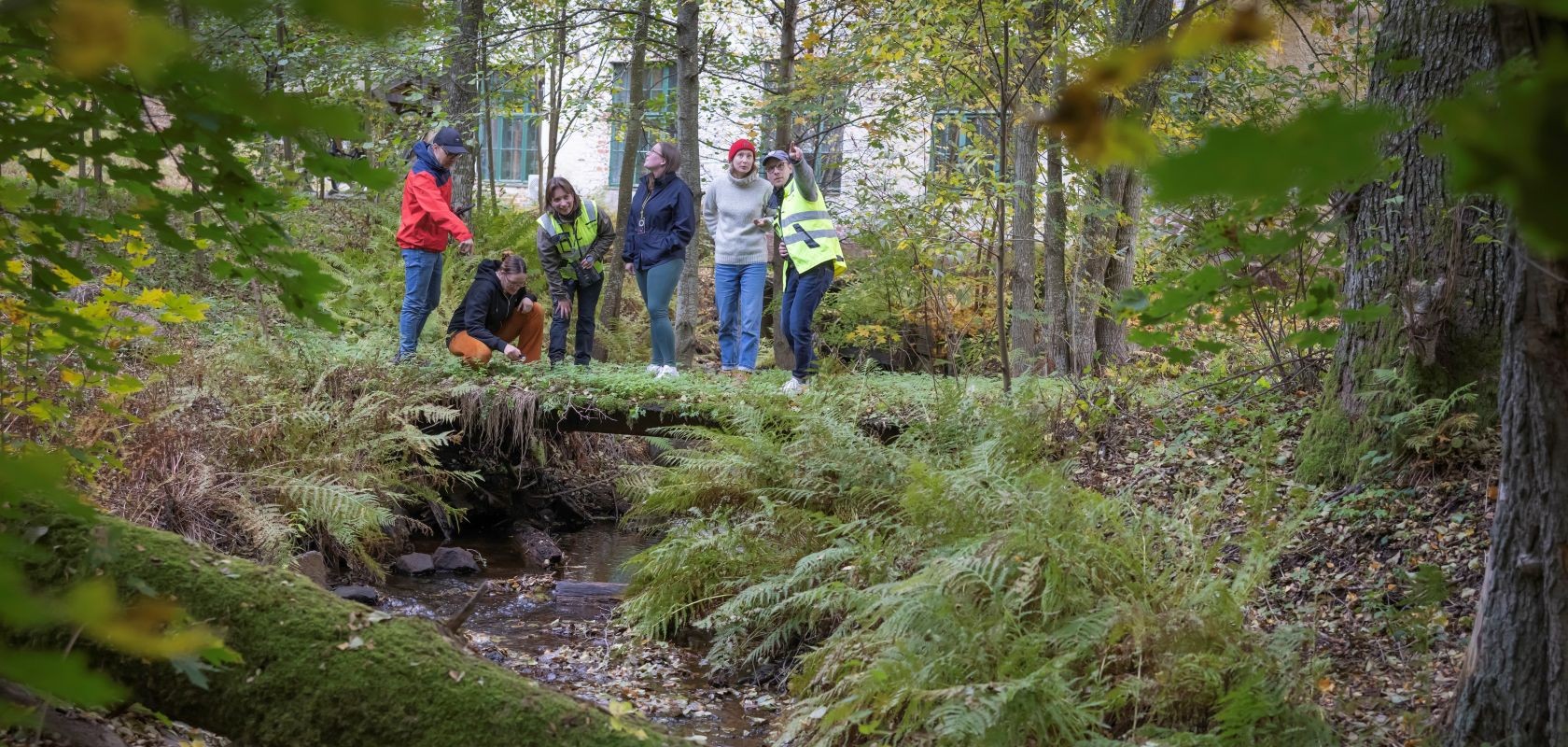
Find out the nature values of your project in good time.
Contact our experts and let’s plan nature surveys suitable for your project at the right time.
Nature survey to support permitting, planning and decision-making
The nature survey produces up-to-date and reliable information on the natural values of the area to support land use, construction, industrial and energy projects and infrastructure planning.
Nature surveys can be used to identify the natural values of the planning area, such as noteworthy species, habitat types and ecological connections, before the planning of the project and the progress of construction. Nature surveys are needed in zoning, EIA procedures and other permits related to land use, among other things. Nature surveys are also needed when examining the possibilities of implementing voluntary ecological compensation, restoration or other activities.
The aim is to find design solutions that identify, consider and, in the best case, improve the natural values of the planning area, for example by increasing biodiversity or improving the quality of ecological connections.
Sweco’s ecologists, biologists, foresters and ichthyonomists help to identify the natural values that are essential for the project, assess the impacts and find solutions that can be used to take nature into account in a timely and responsible manner. Our nature and water system experts work in both small separate studies and large restoration projects and impact assessments. Timely nature information reduces project risks, supports official processes and helps to take biodiversity into account in decision-making.
What can a nature survey include?
The content of the nature survey is always determined according to the location, objectives, official requirements and planning phase of the project. The work begins with the compilation and preliminary review of the existing initial data. After that, the necessary field surveys are carried out, the significance of the observations is assessed, and a clear report is prepared to support planning, permit processes and decision-making.
Sweco’s experts carry out, for example, habitat and vegetation surveys, bird and bat surveys, flying squirrels, moor frogs and other species surveys, surveys related to waterways, desktop reviews and nature impact assessments based on the surveys. If necessary, we also utilise new methods, such as environmental DNA (eDNA), which can complement traditional terrain methods and help identify species that are difficult to detect.
Our experts are constantly updating their expertise in new methods and legislation. Our experts include special expertise in, for example, the BOOST method, voluntary ecological compensation under the Nature Conservation Act, nature restoration and biodiversity in the built environment.
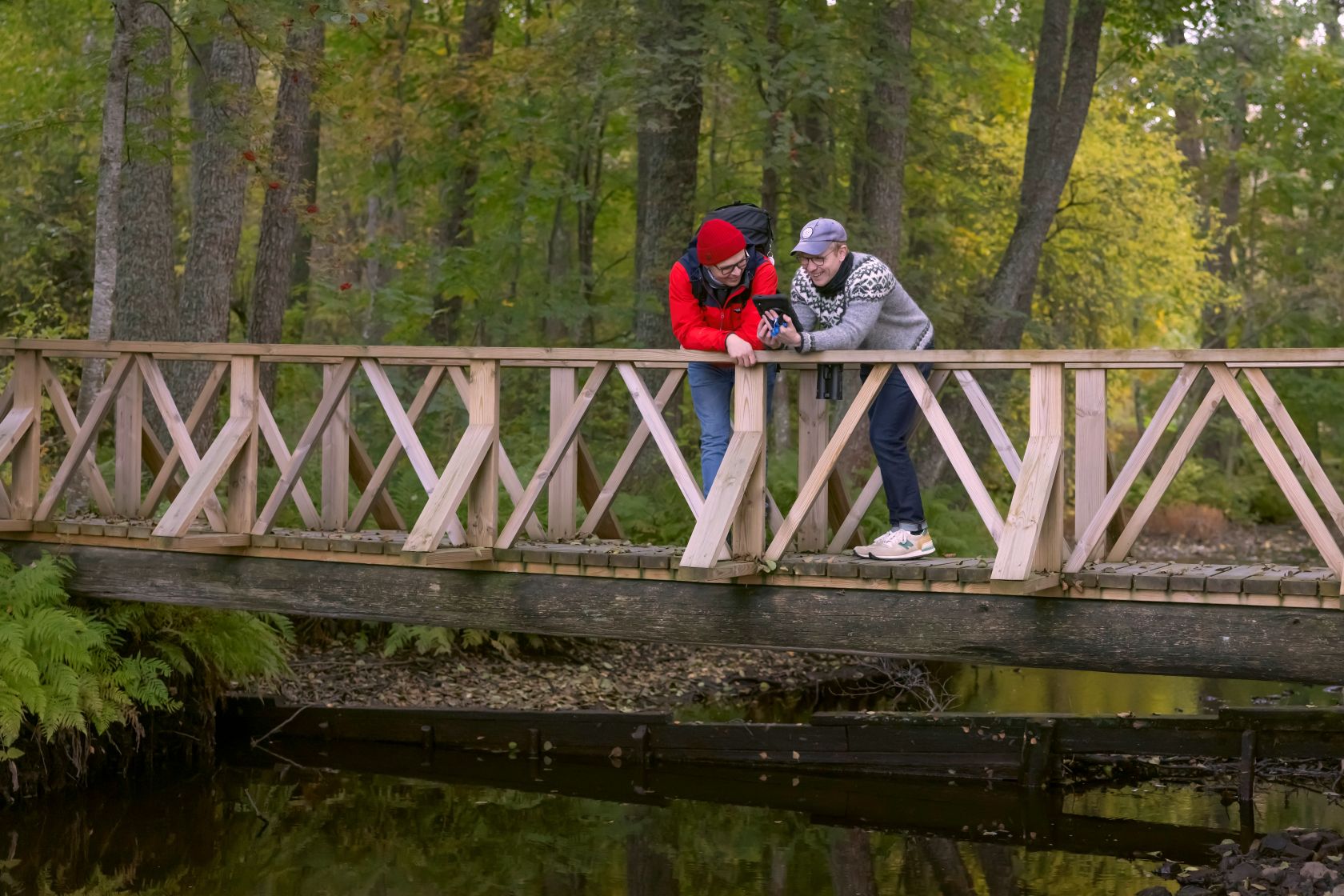
Timely nature survey reduces project risks
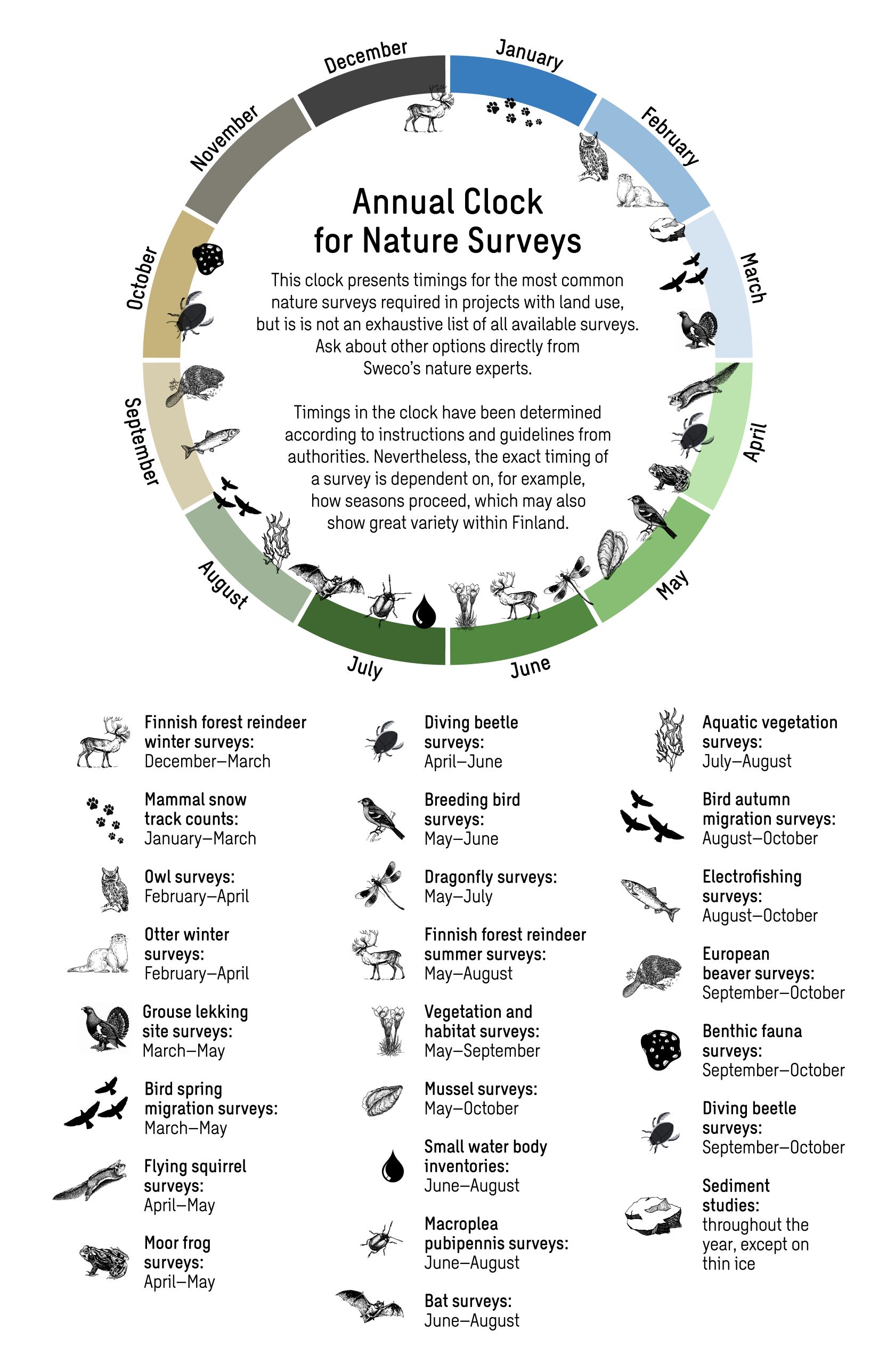
It is advisable to start the nature survey as early as possible in the project, as many species and habitat surveys can only be carried out reliably at a certain time of the year. The preparation of the nature survey should be started at least two months before the start of the field season, so that the initial data, area boundaries and the necessary preliminary examinations can be carried out carefully. In large-scale projects, it is advisable to reserve more time for preparation.
When the nature survey is planned in good time as part of the project schedule, the nature information in the project area is available in time, which supports environmentally responsible planning solutions at the right time, helps to identify environmental boundary conditions, and reduces project delays and permit process risks.
Our nature survey services
- Vegetation and habitat surveys (also BOOST)
- Field surveys of birds, bats, flying squirrels, moor frogs and other noteworthy species
- Desktop reviews and collision risk modelling related to wild forest reindeer, large carnivores or other species
- Nature surveys related to waterways and shore areas
- Environmental DNA surveys to complement traditional methods
- Nature impact assessments and planning of mitigation measures
- Biodiversity surveys, restoration plans, and ecological compensation surveys and calculations
- Applications for derogation permits
- Planning, scheduling and reporting of surveys for the needs of authorities and planning
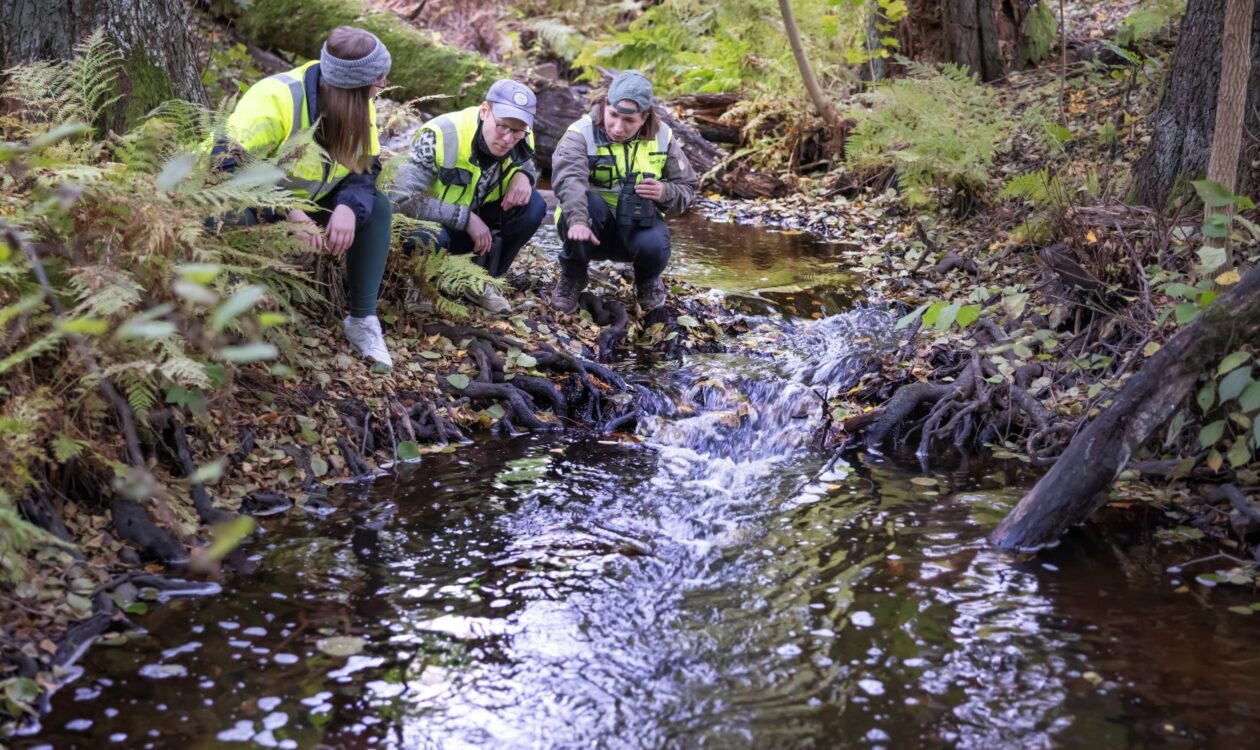
A new era of nature surveys – eDNA
Although nature surveys often require a lot of fieldwork and the right timing, environmental DNA, or eDNA, brings more flexibility to the surveys. With the help of eDNA technology, the species and biodiversity of the project area can be mapped from DNA samples collected from the environment, for example, from water, soil, snow or air. This can complement traditional field methods and enable many surveys to be carried out outside the actual field season.
eDNA is suitable for identifying species that are difficult to detect, endangered or invasive, monitoring changes in fish species communities, mapping beneficial fungi in the soil, and monitoring the ecological status of restoration and compensation areas. Sweco offers an initial consultation, sampling from the project area, coordination of laboratory work, data analysis and an easy-to-use result report for eDNA surveys.
Frequently asked questions about nature surveys
Often they can. When the nature values are known in good time, the location, implementation method, schedule or technical solutions of the project can be modified to avoid or reduce the adverse impacts. If the impacts to statutory nature values cannot be avoided, nature experts will help to prepare an application for a derogation permit, which may also include mitigation measures.
Our nature and water system experts work together with experts in areas such as zoning, infrastructure, construction, environmental impact assessment and permitting to ensure that nature information is part of the overall solution of the project.
The field study season determines when different species groups and habitat types can be reliably surveyed. For example, birds, bats, moor frogs and vegetation require different survey times.
The nature survey should be taken into account at the beginning of the project and ordered well in advance of the field study season, so that the necessary surveys can be planned and carried out at the right time.
The results will be used to specify planning solutions, assess impacts, determine mitigation measures, and support permit applications and dialogue between authorities.
Nature surveys produce information that is essential for decision-making, reduce project risks, support permit processes and help to adapt planning solutions to the surrounding nature. Comprehensive and high-quality nature surveys and taking their results into account may increase the acceptability of the project.
A nature survey is the mapping of the current state of a certain area’s natural values, such as species, habitat types and ecological connections, to support a project or plan.
The findings are evaluated in accordance with official and legal guidelines so that their significance for nature can be assessed in relation to the project’s impact mechanisms and compared to the data available from the project planning. Based on this, it is possible to plan, for example, area boundaries, make changes in project execution schedule, or other solutions to prevent harm for the nature.
The need varies depending on the location, impacts and environment of the project. For example, the occurrence of animal species under the EU Habitats Directive IV a) must be investigated because it is prohibited to weaken the breeding and resting places of these species. Finland’s Nature Conservation Act, on the other hand, has protected certain habitat types and protected plant species. Typically, the surveys needed include vegetation and habitat types, birds, bats, flying squirrels, moor frogs, dragonflies, otters and waterways. In addition to these, migration monitoring, bird of prey observations, snow track counts and several surveys carried out as desktop reviews are carried out.
A nature survey is required when a project, plan or other measure may affect the natural values of the area or when a survey is required to support a permit, EIA procedure or other official process. Nature surveys are also needed when there is a desire to voluntarily take nature values into account beyond what is required by legislation.
Many species and habitat types can only be reliably detected at a certain time of the year. The right timing improves the quality of the survey and reduces the need for further surveys.
Do you need nature surveys for your project?
Contact Sweco’s nature and biodiversity experts if you need nature surveys for project planning, permitting or impact assessment. We will help you determine what kind of surveys your project needs, when they should be carried out and how the results can be used in responsible decision-making.
Suvi Hakulinen
Team Manager, Nature and Biodiversity, Southern FinlandTaru Suninen
Team Manager, Nature and Biodiversity, Northern FinlandJanne Tolonen
Team Manager, Aquatic environment